Commercial Rainwater Harvesting Systems
Commercial rainwater harvesting systems are the collection, filtration and reuse of rainwater from the roof areas of commercial and non-domestic buildings. It provides a reliable source of non-potable water that can be used across a wide range of applications, including toilet flushing, irrigation, vehicle washing and cooling systems.
By reducing demand on mains water, commercial rainwater harvesting systems help organisations lower water costs, improve sustainability and support compliance building standards.
Below, you can learn how commercial rainwater harvesting systems work, explore our solutions for your commercial building and understand the key benefits.

The Benefits
Why Choose a Commercial Rainwater Harvesting System?
Save Water
Save Money
Save the Environment
Stop Runoff
Water Savings with Commercial Rainwater Harvesting Systems
Commercial rainwater harvesting systems enable businesses to significantly reduce mains water consumption by reusing harvested rainwater for non-potable applications.
Across more than 2,500 installed systems, Stormsaver has typically achieved water savings of up to 75% for commercial properties, depending on building type, demand profile and system design.
Unlike many water efficiency measures, rainwater reuse requires no behavioural change from building users. Once installed, it operates automatically, making it one of the most straightforward and reliable ways to improve water efficiency in commercial buildings.
Cost, Payback and Return on Investment for Commercial Rainwater Harvesting Systems
Commercial rainwater harvesting systems provide not only environmental benefits but also long-term financial value through reduced mains water consumption.
For new-build commercial developments, the typical payback period for a rainwater harvesting system is around 15 years at current water pricing. However, this can vary depending on building type, water demand and system design.
How Commercial Rainwater Harvesting Helps the Environment
Commercial rainwater harvesting is no longer a “nice to have” – it is a necessity. With a 5-billion-litre daily water deficit forecast within the next 25 years by the Environment Agency, we are facing a future where available water supplies will not be sufficient to meet growing demand.
Every property built without a commercial rainwater harvesting system compounds the problem of water scarcity. Retrofitting systems later is more costly and significantly limits potential savings, making installation at the design stage essential.
Commercial properties, in particular, represent a major opportunity. With large roof areas, they can capture and reuse far greater volumes of rainwater, delivering substantially higher water savings than residential developments.
Comply with the National Standards for SuDS through Commercial Rainwater Harvesting
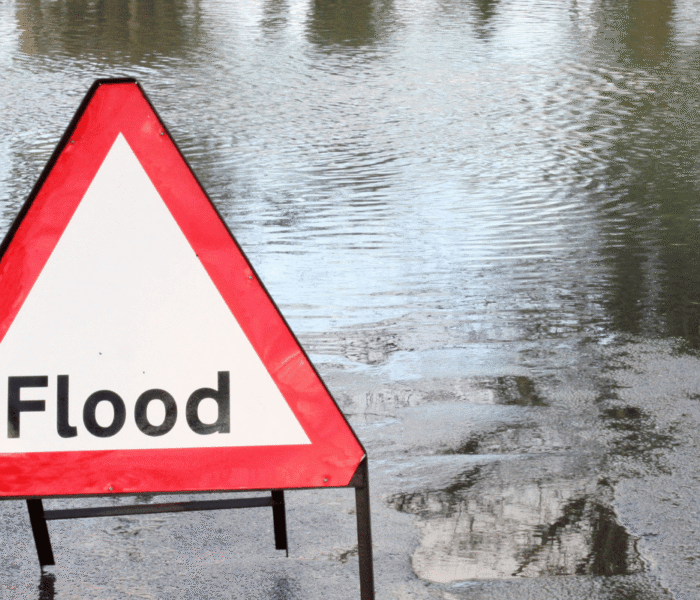
Integrating a commercial rainwater harvesting system into the building specification can significantly reduce stormwater runoff. When combined with Smart SuDS, runoff rates across the development can be reduced by up to 95%.
By managing rainwater at source, your project can meet the National Standards for SuDS, help relieve pressure on combined sewer networks, and play an active role in reducing the risk of localised flooding.
Save Water
Water Savings with Commercial Rainwater Harvesting Systems
Commercial rainwater harvesting systems enable businesses to significantly reduce mains water consumption by reusing harvested rainwater for non-potable applications.
Across more than 2,500 installed systems, Stormsaver has typically achieved water savings of up to 75% for commercial properties, depending on building type, demand profile and system design.
Unlike many water efficiency measures, rainwater reuse requires no behavioural change from building users. Once installed, it operates automatically, making it one of the most straightforward and reliable ways to improve water efficiency in commercial buildings.
Save Money
Cost, Payback and Return on Investment for Commercial Rainwater Harvesting Systems
Commercial rainwater harvesting systems provide not only environmental benefits but also long-term financial value through reduced mains water consumption.
For new-build commercial developments, the typical payback period for a rainwater harvesting system is around 15 years at current water pricing. However, this can vary depending on building type, water demand and system design.
Save the Environment
How Commercial Rainwater Harvesting Helps the Environment
Commercial rainwater harvesting is no longer a “nice to have” – it is a necessity. With a 5-billion-litre daily water deficit forecast within the next 25 years by the Environment Agency, we are facing a future where available water supplies will not be sufficient to meet growing demand.
Every property built without a commercial rainwater harvesting system compounds the problem of water scarcity. Retrofitting systems later is more costly and significantly limits potential savings, making installation at the design stage essential.
Commercial properties, in particular, represent a major opportunity. With large roof areas, they can capture and reuse far greater volumes of rainwater, delivering substantially higher water savings than residential developments.
Stop Runoff
Comply with the National Standards for SuDS through Commercial Rainwater Harvesting
Integrating a commercial rainwater harvesting system into the building specification can significantly reduce stormwater runoff. When combined with Smart SuDS, runoff rates across the development can be reduced by up to 95%.
By managing rainwater at source, your project can meet the National Standards for SuDS, help relieve pressure on combined sewer networks, and play an active role in reducing the risk of localised flooding.
How it Works
How Commercial Rainwater Harvesting Systems Work
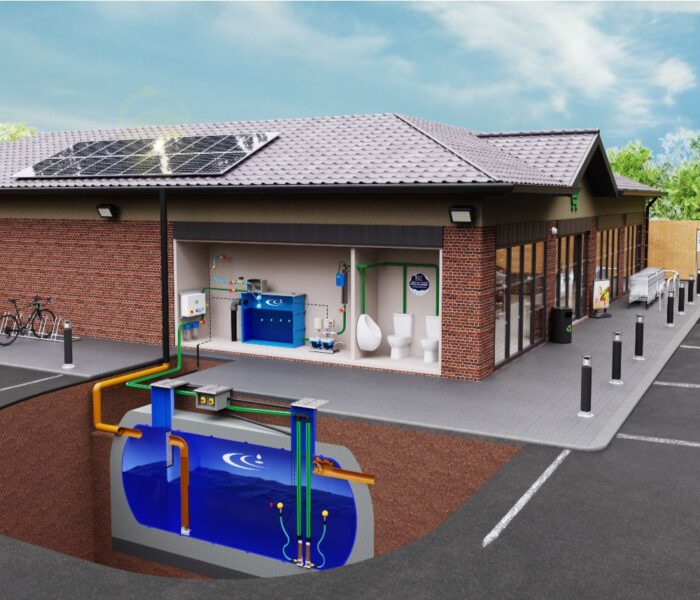
- Rainwater is collected from the roof.
- It passes through a pre-tank filter to remove larger debris.
- The water enters the main storage tank via an inlet calmer, which prevents sediment disturbance.
- Rainwater is then pumped into the building using submersible pumps.
- The pumps deliver the water into a break tank.
- The break tank is usually filled with rainwater, but if the supply runs low, mains water automatically tops it up.
- Optional UV disinfection and advanced filtration can be added here to further improve water quality.
- Finally, the rainwater is pumped for toilet flushing, irrigation, and other non-potable uses.
Sectors
Commercial Sectors That Use Rainwater Harvesting Systems

Logistics
Distribution Centres have vast roof areas for collecting rainwater with high volumes of storm water runoff - ideal for reuse.

Retail
Rainwater can be collected and safely re-used for toilet flushing and washing home delivery vehicles.

Leisure
Leisure Buildings typically suffer from high water usage but have large roof areas - making them ideal for rainwater reuse.

Education
Include rainwater harvesting and help to inspire the next generation of designers and water conservationists.

Government
Rainwater reuse is ideal for Ministry of Defense, Ministry of Justice and local authority buildings.

Transport
Supply fleet wash plants with a sustainable supply of rainwater collected from your roof area.

Industrial
Rainwater can be used for cooling, dust suppression and even for manufacturing processes.
Our Solutions
Commercial Rainwater Harvesting Systems and Solutions
Our commercial rainwater harvesting systems have been designed with industry leading quality and reliability. Our designs have been informed by over two decades worth experience in the water reuse industry. Take a look at our solutions below.

Scalable & Highly Reliable
Non-pressurised System
Our non-pressurised system is one of the most reliable ways of achieving commercial rainwater harvesting. The system collects rainwater in a central below or above ground storage tank and then boosts collected rainwater to an intermediary break tank.
We will size your break tank to provide a suitable level of internal storage capacity to meet your peak water demands. The break tank is also home to the automatic mains water backup function which will operate in periods of prolonged drought periods. This water is boosted to points of use via an energy efficient booster set.


Compact & Easy to Install
Combi System
The combi system collects captured rainwater in an above or below ground storage tank. When a demand is detected within the building, a set of submersible pumps boost the rainwater to the combi unit. Our uniquely designed combi unit houses controls, a break tank, automatic mains water back up and an energy efficient booster set in one pre-manufactured unit. It’s like a compact version of a non-pressurised system.
The Stormsaver Combi is unique on the market in that it comes in a range of capacities which should suit your project’s peak demand. We can do these calculations for you, just request a quote.
The most common type of Commercial Rainwater Harvesting System in the UK!

Modular & Carbon Neutral
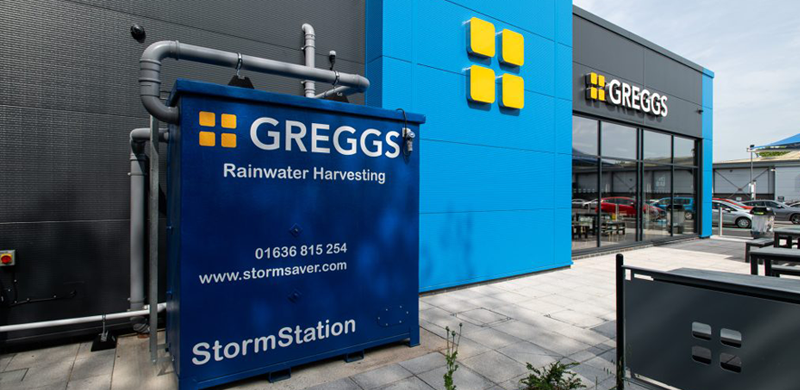
StormStation
Our StormStation is a completely plug and play solution designed to house all the components needed for rainwater harvesting in one weatherproof structure. StormStation is ideal for retrofitting to existing buildings and is even ideal for new builds where a simple and speedy installation is required. As standard, we offer the advanced feature of automatic UV re-circulation. A small, energy-efficient pump continuously cycles rainwater through a UV disinfection unit, preventing legionella development.

Comparison Guide
Choosing the Right Commercial Rainwater Harvesting System
Non-Pressurised System
Best for:
Large-scale commercial buildings with high water demands.
Ideal Building Types:
Sports stadiums and arenas,
Mixed-use developments,
Office buildings,
Hotels, hospitality, and event venues,
Manufacturing and industrial facilities,
Transport and infrastructure buildings.
Combi System
Best for:
Medium-scale commercial and public buildings.
Ideal Building Types:
Schools, colleges, and universities,
Leisure centres and gyms,
Distribution and logistics centres,
Government buildings,
Police and fire stations,
Supermarkets.
StormStation
Best for:
Sites with limited space or retrofit projects.
Ideal Building Types:
Commercial retrofits and refurbishments,
Buildings with minimal space for plant equipment,
Sites with limited excavation potential,
New projects with tight spatial constraints.
Further Information On Commercial Systems

Compliance Information
All of our Commercial Rainwater Harvesting Systems are compliant with the below requirements.
British Standard
All Stormsaver commercial rainwater harvesting solutions are designed in full compliance with BS 16941-2024 for on-site non-potable water systems. This standard covers every aspect of rainwater harvesting in the UK, including design, sizing, installation, identification, commissioning, and maintenance.
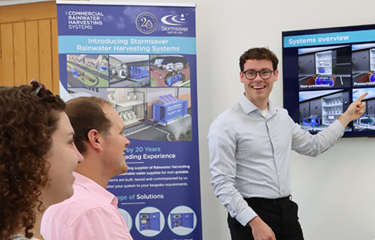
More information on this is available via one of our CPD Training Sessions
CIRIA SUDs Manual
Commercial Rainwater Systems is a recognised sustainable urban drainage (SUDs) method, as endorsed by the CIRIA SUDs manual. In fact, it ranks at the top of the SUDs hierarchy, making it the premier choice for sustainable water management.
BREEAM
Commercial Rainwater harvesting can contribute to a higher BREEAM rating by earning valuable credit points; 5 points for meeting 75% of flushing demand with rainwater, 4 points for 50%, and 3 points for 25%.
An additional 6th point can be claimed through an “innovation credit” by meeting 95% of your non-potable demand with recycled rainwater.
More information on this is available via one of our CPD Training Sessions

Specification Tips
These tips follow BS EN 16941-1:2024 and reflect best-practice lessons we have experienced over the past two decades for commercial rainwater harvesting systems.
Collection pipework
Best practice is to connect roof down pipes to below-ground drainage via sealed gullies rather than open grates, which helps avoid potential contamination.
Pre-tank filter
Should be rated to 1,000 microns (1 mm) as per the Standard and be accessible from ground level for easy maintenance.
Storage tank
Can be above or below ground, typically sized to hold around 18 days’ worth of water to meet building demand.
Break tank
Best practice is to size it for peak demand over a sustained period – we can advise on the specifics.
Automatic mains water top-up
Include leak protection to prevent unexpected water bills.
UV disinfection
UV can deactivate up to 99.99% of harmful bacteria. Where UV is used, a third stage of filtration is also recommended.
Our projects
Commercial Rainwater Harvesting Case Studies
FAQs
Got a question?
What is a commercial rainwater harvesting system?
A commercial rainwater harvesting system is designed to utilise large scale roof areas on a non-household building to safely collect, treat and distribute a sustainable water supply for non-potable use.
Commercial systems are formed of high-grade components and include many fail-safes which make them suited to the demand requirements of high occupancy commercial buildings.
Commercial rainwater harvesting systems are designed for buildings such as, prisons, leisure centres, schools, distribution centres, offices, train stations and many other commercial building typologies. Read our applications guide.
Why does the UK need more commercial rainwater harvesting systems?
- We will face a 5 billion litre daily deficit for water in England by 2055
- 60% of the deficit will be solved through greater water efficiency, including water reuse
- If we wait to retrofit, costs can be on average 50% more than installation at new build and saving potential is limited
- Commercial properties offer the biggest water saving potential because of the high demand for water and large roof spaces
What information do you need to size a commercial rainwater harvesting system?
To provide a suitably sized and quoted commercial rainwater harvesting system, we will require the following information:
- Site name & post code
- Collecting roof area
- Building occupancy
- Number of toilets, irrigation or vehicle wash requirements
Based on the above information, we can provide a full quote which is tailored to your site requirements. We will recommend which system type is best too. Get a quote.
Do you consider climate change when sizing the storage capacity on a commercial system?
Yes.
Here is how we incorporate climate change within the sizing of the commercial rainwater tank:
- We will calculate the rainfall collection potential in litres
- We will calculate the total demand for rainwater in litres
- We will take the smallest of the two calculations for the final tank size
- If the yield calculation is chosen, this will take into account a climate change simulation
- This will account for less rainfall in the summer and more rainfall in the winter
These calculations are based in line with BS 16941-1:2024 which is the UK standard for commercial rainwater harvesting systems.
Is there a minimum and maximum distance between the main storage tank and break tank?
There is no maximum distance between the main storage tank and break tank.
Here is why…
- Components on a commercial rainwater harvesting system are bespoke and sized suitably for the building requirements
- We can adjust the specification of the pumps required to transfer rainwater
- We provide full pump curves and performance specifications for our commercial rainwater harvesting systems
What additional filtration do you provide on commercial systems?
As standard, commercial rainwater harvesting systems include two stages of filtration:
● Pre-tank filter – 1,000 microns
● Floating suction filter – 1,000 microns
In many commercial applications, a third stage of filtration is recommended to improve water quality and system performance. Common options include:
- Two disposable cotton wound filters, typically 50 microns followed by 35 microns
- Manual replacement required
- Provides improved filtration compared to no third stages
- Automated backwash filter, typically 35 microns
- Reduces ongoing maintenance requirements
For most commercial rainwater reuse applications, a third filtration stage is sufficient. Some specialist projects may require further treatment.
Additional filtration options include:
● Carbon filtration – removes odour and mild discolouration
Adding additional filtration improves overall water quality, enhances UV disinfection performance, and protects pumps and downstream components from debris.
What Can Commercial Rainwater Harvesting Be Used For?
How do your commercial rainwater systems reduce the risk of Legionella growth?
Stormsaver Commercial Rainwater Harvesting Systems are designed to minimise the conditions that allow Legionella to develop, addressing several common risk areas.
Mains water top-up dead legs
If the mains water top-up is rarely used, stagnation can occur. To prevent this, the mains water top-up is programmed to open briefly each night as standard, ensuring regular water movement and reducing stagnation risk.
Legionella within stored rainwater
UV disinfection is recommended as standard and can deactivate up to 99.99% of harmful bacteria. UV units are installed on the system outlet, as close as possible to the points of use. Where UV is specified, a third stage of filtration is also recommended to reduce UV shadowing and improve disinfection efficiency.
Header tank location and water temperature
Header tanks located in roof or loft spaces are more susceptible to elevated water temperatures. To reduce this risk, header tanks are typically located at low level, such as within a plant room or basement, with water boosted to outlets via a booster set.
Optional temperature sensors can also be supplied to provide additional monitoring where required.
How is cross-contamination between mains water and rainwater prevented on commercial systems?
Preventing cross-contamination between the public water supply and non-potable commercial rainwater harvesting systems is critical and is addressed through system design, installation, and pipework identification.
Mains water top-up protection
On our commercial rainwater harvesting systems, the mains water top-up is physically separated from the stored rainwater via an AA or AB airgap. In the event of an overflow failure, rainwater will safely discharge across the air gap, preventing contact with the mains supply. These arrangements comply with BS EN 16941-1:2024.
Internal pipework separation
To prevent cross-contamination within the building, only approved pipework materials and identification methods are used. Commercial rainwater systems utilise black and green MDPE pipework, or clearly labelled copper pipework in accordance with WaterRegsUK guidance.
Close coordination with contractors ensures correct materials and identification are maintained throughout installation and maintenance. We will always advise to use the correct identification techniques.
Designed for Engineers