Commissioning Services
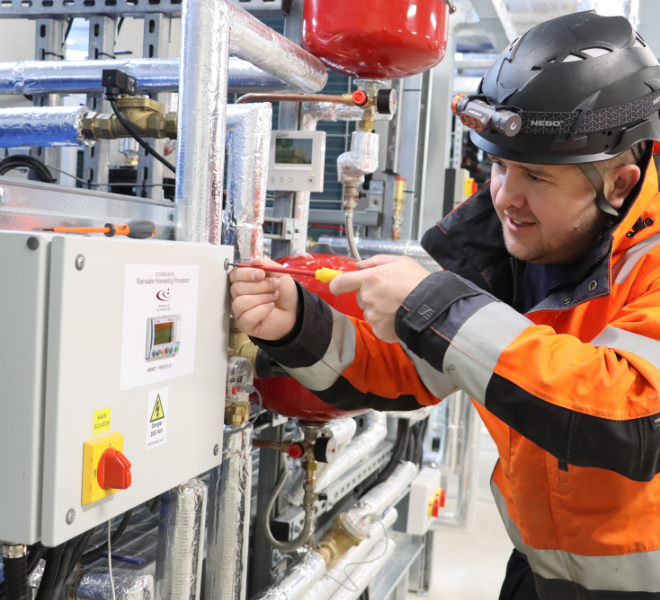
Commissioning is an essential part of the safe installation of any rainwater harvesting or greywater recycling system.
Once installation is complete, a trained Stormsaver engineer will visit the site to carry out a series of checks, ensuring the system has been installed correctly and is ready for use.
Commissioning is included as standard with every Stormsaver system and is a requirement before the system becomes operational. Below, you’ll find information on what to expect during commissioning and how to prepare for the visit.

What to Expect
Pipework and Pumping Check
A visual inspection of accessible pipework to confirm correct labelling, colour identification and compliance with water regulations, including the presence of the required air gap.
Tank Check
An above-ground inspection of the storage tank to ensure it is free from debris and includes all required components, such as an overflow connection and non-return valve arrangements.
Pre-Tank Filter Check
A visual inspection of the filter to confirm it has been installed correctly, is functioning as intended, and can be safely accessed for future maintenance.
Control Unit Check
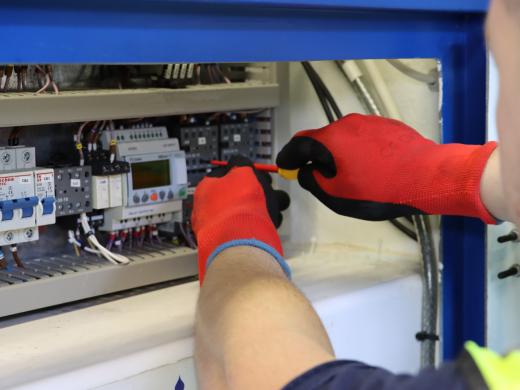
An inspection of the control unit to verify power availability, correct operation, suitable maintenance access and the presence of any required isolation equipment.
Pre-Commissioning Visit Checklist
To help ensure a smooth and successful commissioning visit, we recommend reviewing the checklist below before your scheduled visit.
Based on our experience, we have identified a number of common installation issues that can prevent commissioning from being completed on the first visit.
By checking these items in advance and ensuring any outstanding works have been completed, you can help avoid delays, additional site visits and associated costs.
1. Is your pipework lagged?
2. Is your pipework labelled correctly?
3.Do your outdoor taps have the correct protective measures?
4.Are your electrical isolation points located in the correct place?
5.Does your tank have poor water quality?
6.Is the pipework within your tank installed correctly?
7.Have you checked your electrical supplies?
8.Has the BMS been installed and completed before commissioning?
9.Is the power supply permanent?
10.Are all the intended outlets connected and operational?
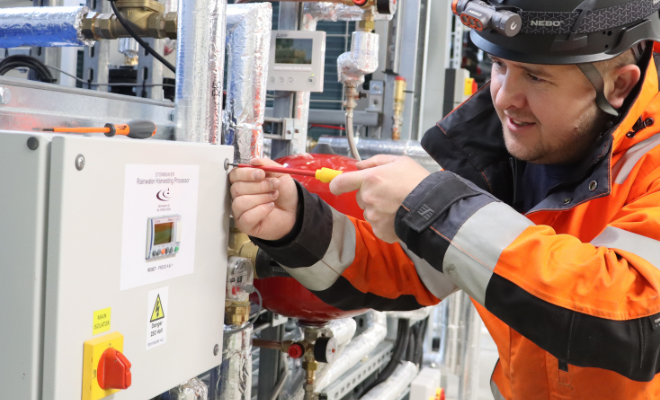
Ensuring all pipework is appropriately lagged and insulated is essential so we can assure your system is protected against freezing and heat gain.
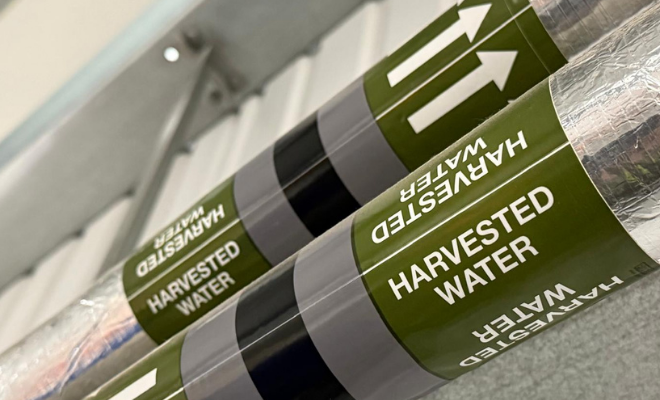
Rainwater harvesting and greywater recycling systems distribute non-potable water and must be clearly identified.
In accordance with BS 1710:2014, all non-potable water pipework should be identified using a green, flint grey and black colour scheme. Guidance can be found in the WaterRegsUK pipe identification guide.
All pipework distributing non-potable water from a water reuse system should be correctly labelled before the commissioning visit.
For internally located copper pipework, we recommend using identification tape applied at intervals of no more than 500mm. This can be purchased from your Stormsaver Project Coordinator.
Important: Blue MDPE pipework must not be connected directly to a rainwater harvesting or greywater recycling system.
Where a rainwater harvesting or greywater recycling system supplies outdoor taps, each tap should be clearly labelled as a non-potable water outlet in accordance with BS EN 16941-1:2024.
Outdoor taps should also be fitted with a suitable safety measure to prevent misuse, such as a detachable operating handle or a lockable cover, as required by BS EN 16941-1:2024.
Before commissioning, please ensure all outdoor taps are correctly labelled and protected.
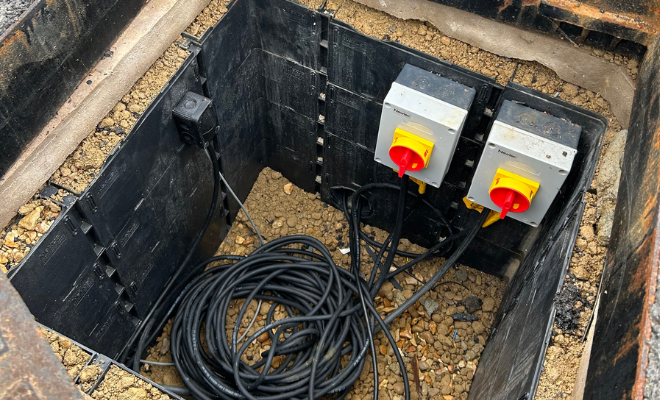
Each submersible pump must have its own local electrical isolation point to allow the pump to be safely isolated for maintenance.
As submersible pumps are often located some distance from the control unit, local isolation is required to ensure safe working practices.
For rainwater harvesting systems with below-ground tanks, the local electrical isolators for each submersible pump should be installed within a dedicated electrical chamber and not fixed to the side of an access turret.
Before commissioning, please ensure all submersible pumps have suitably located isolation points.
During construction, debris can enter the storage tank of a rainwater harvesting system. This can result in poor water quality when the system is first brought into operation.
If excessive debris is present during the commissioning visit, the engineer may be unable to start the system. This is to prevent damage to pumps, filters and other internal components.
We strongly recommend that tanks be fully cleaned before the commissioning visit.
To support this, Stormsaver offers a specialist tank cleaning service designed specifically for rainwater harvesting systems. This service carefully removes construction debris without damaging internal components, helping to avoid delays to commissioning.
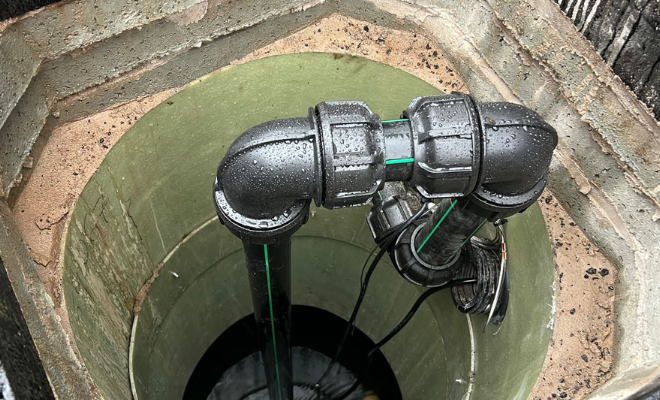
Within the main storage tank of a rainwater harvesting system, pipework connecting the submersible pumps to the incoming ducting should be installed within 300 mm of finished ground level.
This positioning is essential to ensure safe and straightforward access for future maintenance.
If pipework is installed below this level and is not easily accessible, additional confined space entry equipment will be required during maintenance visits, which can significantly increase servicing costs.
Where joints are present, compression fittings should be used to support ease of maintenance and future system alterations.
Whilst most components for the overall rainwater harvesting and greywater recycling system are likely to be powered from our central control unit, there may be additional components which may require their own power supplies.
Examples of components which may require their own power supplies include…
- UV treatment systems
- Standalone booster sets
- Additional filtration systems
Before commissioning, these components should have their power supplies installed to ensure they can be fully commissioned.
The Building Management System (BMS) should be fully installed and operational before the commissioning of the rainwater harvesting or greywater recycling system.
Where the BMS is active, our engineers can simulate system fault conditions to verify that the correct signals are received and displayed within the BMS.
If fault signals are not correctly communicated, our engineer will highlight this through our commissioning report.
The rainwater harvesting or greywater recycling system should be connected to its permanent power supply before commissioning takes place.
This allows our engineer to verify that the system is operating correctly and communicating with any connected equipment, such as irrigation systems, toilet flushing controls and the Building Management System (BMS).
If the system is operating on a temporary power supply, some commissioning checks may not be possible, which will result in a costly recommissioning visit.
All outlets served by the rainwater harvesting or greywater recycling system should be connected and operational before commissioning.
This allows our engineer to confirm that recycled water is being delivered to the outlets correctly and that the system is operating as designed.
Where outlets are not yet connected, or water is being discharged from a drain point as a temporary measure, commissioning cannot be fully completed and may result in a return site visit when all outlets are connected.
1. Is your pipework lagged?
Ensuring all pipework is appropriately lagged and insulated is essential so we can assure your system is protected against freezing and heat gain.
2. Is your pipework labelled correctly?
Rainwater harvesting and greywater recycling systems distribute non-potable water and must be clearly identified.
In accordance with BS 1710:2014, all non-potable water pipework should be identified using a green, flint grey and black colour scheme. Guidance can be found in the WaterRegsUK pipe identification guide.
All pipework distributing non-potable water from a water reuse system should be correctly labelled before the commissioning visit.
For internally located copper pipework, we recommend using identification tape applied at intervals of no more than 500mm. This can be purchased from your Stormsaver Project Coordinator.
Important: Blue MDPE pipework must not be connected directly to a rainwater harvesting or greywater recycling system.
3.Do your outdoor taps have the correct protective measures?
Where a rainwater harvesting or greywater recycling system supplies outdoor taps, each tap should be clearly labelled as a non-potable water outlet in accordance with BS EN 16941-1:2024.
Outdoor taps should also be fitted with a suitable safety measure to prevent misuse, such as a detachable operating handle or a lockable cover, as required by BS EN 16941-1:2024.
Before commissioning, please ensure all outdoor taps are correctly labelled and protected.
4.Are your electrical isolation points located in the correct place?
Each submersible pump must have its own local electrical isolation point to allow the pump to be safely isolated for maintenance.
As submersible pumps are often located some distance from the control unit, local isolation is required to ensure safe working practices.
For rainwater harvesting systems with below-ground tanks, the local electrical isolators for each submersible pump should be installed within a dedicated electrical chamber and not fixed to the side of an access turret.
Before commissioning, please ensure all submersible pumps have suitably located isolation points.
5.Does your tank have poor water quality?
During construction, debris can enter the storage tank of a rainwater harvesting system. This can result in poor water quality when the system is first brought into operation.
If excessive debris is present during the commissioning visit, the engineer may be unable to start the system. This is to prevent damage to pumps, filters and other internal components.
We strongly recommend that tanks be fully cleaned before the commissioning visit.
To support this, Stormsaver offers a specialist tank cleaning service designed specifically for rainwater harvesting systems. This service carefully removes construction debris without damaging internal components, helping to avoid delays to commissioning.
6.Is the pipework within your tank installed correctly?
Within the main storage tank of a rainwater harvesting system, pipework connecting the submersible pumps to the incoming ducting should be installed within 300 mm of finished ground level.
This positioning is essential to ensure safe and straightforward access for future maintenance.
If pipework is installed below this level and is not easily accessible, additional confined space entry equipment will be required during maintenance visits, which can significantly increase servicing costs.
Where joints are present, compression fittings should be used to support ease of maintenance and future system alterations.
7.Have you checked your electrical supplies?
Whilst most components for the overall rainwater harvesting and greywater recycling system are likely to be powered from our central control unit, there may be additional components which may require their own power supplies.
Examples of components which may require their own power supplies include…
- UV treatment systems
- Standalone booster sets
- Additional filtration systems
Before commissioning, these components should have their power supplies installed to ensure they can be fully commissioned.
8.Has the BMS been installed and completed before commissioning?
The Building Management System (BMS) should be fully installed and operational before the commissioning of the rainwater harvesting or greywater recycling system.
Where the BMS is active, our engineers can simulate system fault conditions to verify that the correct signals are received and displayed within the BMS.
If fault signals are not correctly communicated, our engineer will highlight this through our commissioning report.
9.Is the power supply permanent?
The rainwater harvesting or greywater recycling system should be connected to its permanent power supply before commissioning takes place.
This allows our engineer to verify that the system is operating correctly and communicating with any connected equipment, such as irrigation systems, toilet flushing controls and the Building Management System (BMS).
If the system is operating on a temporary power supply, some commissioning checks may not be possible, which will result in a costly recommissioning visit.
10.Are all the intended outlets connected and operational?
All outlets served by the rainwater harvesting or greywater recycling system should be connected and operational before commissioning.
This allows our engineer to confirm that recycled water is being delivered to the outlets correctly and that the system is operating as designed.
Where outlets are not yet connected, or water is being discharged from a drain point as a temporary measure, commissioning cannot be fully completed and may result in a return site visit when all outlets are connected.