Commercial Rainwater Solutions
Rainwater Harvesting for Leisure & Hospitality
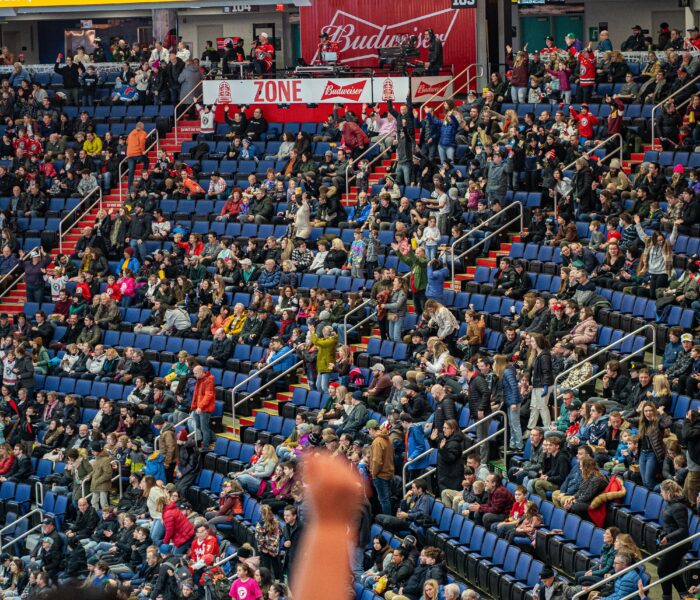
A stadium, arena or leisure venue rarely fails because of its average day. It fails because of its busiest one: full capacity, every toilet in use at once, and a system that was only ever designed around a typical Tuesday. Large roof areas paired with that kind of peak demand make leisure and hospitality venues some of the strongest candidates anywhere for rainwater harvesting, but only if the system is engineered for the day it actually has to perform.
Stormsaver has designed and delivered rainwater harvesting for some of the UK’s highest-profile venues, including the Alexander Stadium and Leeds Arena, and understands exactly what it takes to keep water flowing when a venue is at full capacity.
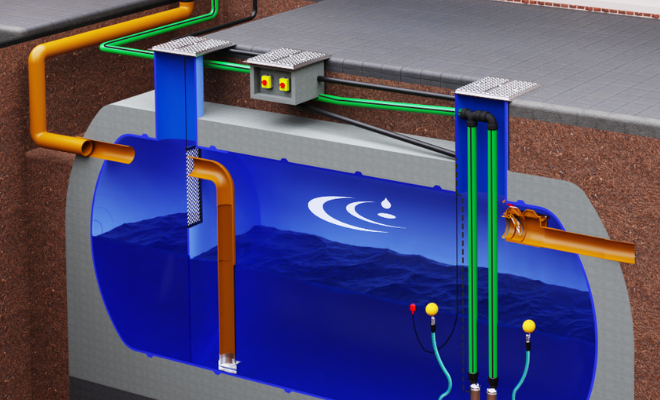
Find What You Need
Sizing for peak-event demand, not average daily demand
This is the engineering challenge that sets leisure and hospitality apart from every other commercial vertical. A distribution centre or office block sizes its system around steady, predictable daily use. A stadium or arena has to size around a spike: thousands of people, all using the washrooms within the same narrow window, on a handful of event days a year.
Get this wrong and the failure is immediate and visible: toilets running dry at the exact moment a venue is at maximum capacity, in front of the largest audience it will see all year.
BS EN 16941-1 sizes the main storage tank using two calculations, roof yield against building demand, and adopts the smaller. What it doesn’t cover is the sizing of the internal break tank, and that’s the gap that causes most system failures. Stormsaver sizes the break tank specifically to meet peak demand rather than an average, going beyond what the British Standard requires.
Leisure & Hospitality Case Studies


Built-in redundancy: why event-day reliability is non-negotiable
A water supply failure during a live, ticketed or televised event isn’t a maintenance footnote. It’s a reputational and operational incident, playing out in front of the people a venue most needs to impress.
Stormsaver builds redundancy into these systems as standard:
- PLC controls, which use replaceable relays rather than the printed circuit boards found in cheaper systems, which need full replacement on failure.
- Automatic mains water backup, switching in through a compliant air gap without any need for manual intervention.
- Mechanical ball valves on the break tank inlet, which fail safe rather than sticking open the way a solenoid valve can.
- Dry-run protection on booster pumps, and mains water protection with leak alerts to catch a fault before it becomes a runaway bill.
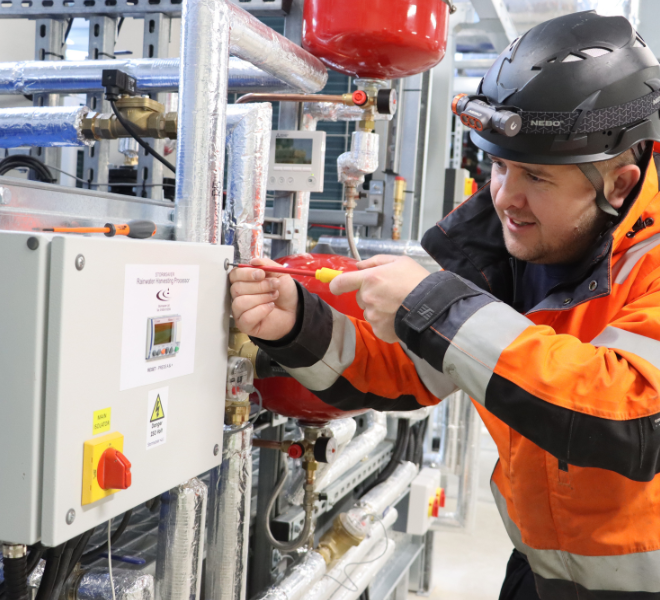
The non-pressurised system architecture itself adds a layer of reliability: because mains water tops up the header tank automatically, supply keeps flowing through routine maintenance as well as component failure. BMS connectivity and the Rainwater Harvesting Monitoring System give facilities teams live status and fault alerts, so an issue is caught long before an event day.
Non-pressurised systems for large venues
Large leisure and hospitality venues are typically specified with a non-pressurised system. Rainwater is collected in a central tank, boosted to an intermediary break tank, and boosted again to points of use, an arrangement Stormsaver rates as one of the most reliable ways to deliver rainwater harvesting at scale. For high demand and reduced maintenance, this is often specified as a Triplex non-pressurised system with automatic backwash filtration, which is self-cleaning and cuts down on manual intervention.
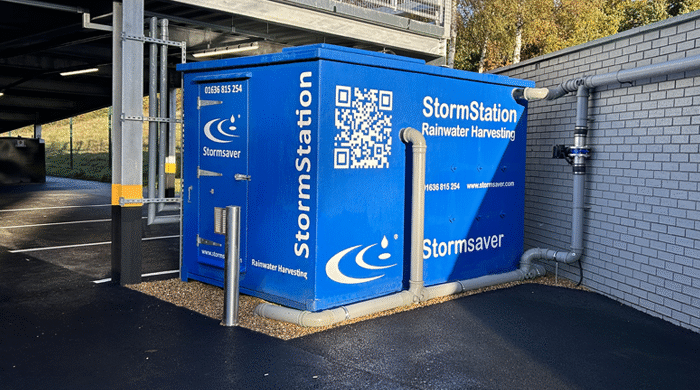
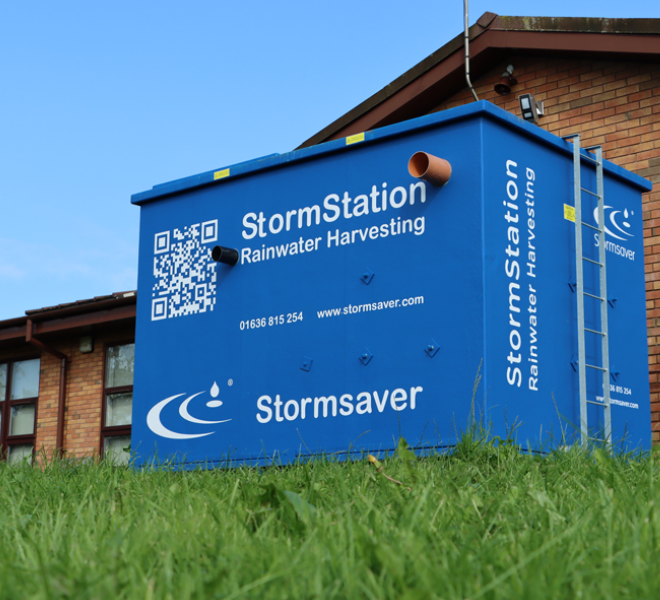
Not every leisure building needs a system of this scale. Combi suits smaller venues with limited plant space, such as gyms and leisure centres, housing a break tank, booster set and controls in a single pre-manufactured unit. StormStation is a good fit for retrofit projects, though it isn’t the right product for irrigation or vehicle-washing applications, which need the higher flow rates of a non-pressurised system.
Every system includes at least two stages of filtration as standard, with automatic backwash filtration and UV disinfection available where guest-facing water quality matters most.
Pitch and grounds irrigation: where the volumes are largest
Sports pitches, golf courses and stadium grounds need water on a different scale entirely, and it’s a demand that maps well onto Smart SuDS storage. A single full-size pitch can lose around 23,000 litres a day to evaporation on a hot English summer day, rising to roughly 160 tonnes over a dry week.
Golf is particularly exposed: over 60% of UK golf courses rely entirely on public water supply for irrigation, according to research published in the International Turfgrass Society Research Journal, and an estimated 1,200 UK golf facilities sit in areas already classified as water stressed. Government drought planning for 2026 has warned that a dry winter would significantly restrict irrigation capacity by spring, with any abstraction or supply restrictions affecting turf survival on greens and tees.
Linking rainwater harvesting to attenuation via Smart SuDS lets venues store and use these large volumes on site, reducing dependence on mains supply and abstraction licences that are increasingly under pressure. Note that this application needs the higher flow rates of a non-pressurised or Active Attenuation system, rather than a StormStation.
Linking rainwater harvesting to attenuation with Smart SuDS
Most new leisure and hospitality developments already need an attenuation system for planning, and that capacity typically sits empty for most of the year, waiting for a storm. Smart SuDS puts it to work instead.
Using Met Office weather prediction data, Stormsaver’s Active Attenuation system combines attenuation and rainwater harvesting into a single, shared capacity. It counts towards 100% of the site’s required attenuation volume while maximising the rainwater available for reuse, and for a leisure venue, that’s exactly what solves the peak-demand problem from the supply side: more stored water available on the handful of days a year it’s needed most.
The system is fail-safe by design. If a component or power failure occurs, it reverts to passive attenuation and the drawdown valve fails open, discharging at the agreed rate, so flood-risk compliance is never put at risk to protect the water supply. Getting the most from this does require the civils and drainage team to work closely with the public health design team from an early stage.

Regulations and sustainability drivers
DEFRA’s National Standards for SuDS, published in June 2025, now place rainwater reuse at the top of the runoff-destination hierarchy, above infiltration, watercourse discharge and sewer connection, meaning any lower-priority option now has to be justified in writing. All Stormsaver systems are designed to BS EN 16941-1:2024, the standard governing sizing, commissioning and maintenance, with certification through WRAS, NSF or KIWA and mains backup kept fully separate via a compliant air gap in line with Part G Building Regulations. For new-build and refurbished venues targeting BREEAM, Wat 01 rewards a reduction in potable water demand, with maximum credits available where recycled or non-potable water meets up to 75% of demand.
The sector itself is moving in the same direction. The Premier League’s Environmental Sustainability Strategy, published in March 2025, targets net zero by 2040 across Scopes 1 to 3, and several clubs already have rainwater or groundwater reuse in place. Hotel groups are under similar pressure, with sustainability increasingly shaping where guests choose to book.

Why Stormsaver
Stormsaver has over 20 years’ experience designing, manufacturing and maintaining rainwater harvesting systems in the UK, with around 2,000 monitored installations delivering an average water saving of 75%. Every project is bespoke: off-the-shelf isn’t considered a solution for water reuse at this scale. Support runs the full lifecycle, from free consultancy and CPD training for design teams through to in-house manufacture, installation, commissioning and ongoing maintenance.
For venues with residential accommodation on site, such as hotels or leisure centres with staff housing, Aqualoop greywater recycling can complement a rainwater system by capturing and reusing shower and basin wastewater alongside it.