Save Water, Reduce Flooding
Rainwater Harvesting
Rainwater harvesting systems collect, filter and store rainwater from rooftops for reuse in non-potable applications such as toilet flushing, irrigation and vehicle washing. Designed for commercial developments, public sector buildings and residential housing schemes, our engineered systems help reduce mains water demand and support sustainable drainage (SuDS).
With over two decades of experience in delivering compliant rainwater harvesting solutions across the UK, we work with developers, engineers and contractors to design systems that meet project specifications and planning requirements. Find out more below.
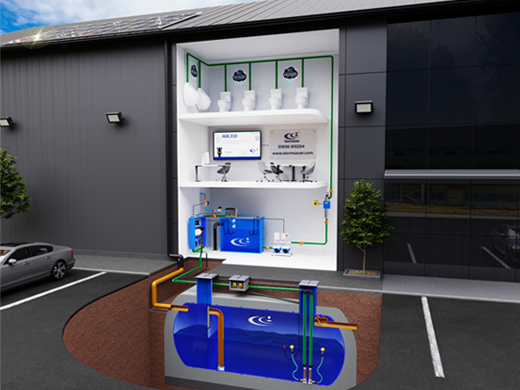
Our Solutions
Rainwater Harvesting for Commercial and Residential Projects
Rainwater harvesting systems can deliver significant water savings in both commercial and residential projects. System design, storage capacity and controls vary depending on building type, occupancy and water demand.
We supply bespoke rainwater harvesting systems for developments of all scales — from large commercial projects to new housing schemes. Explore solutions below.

Commercial
Rainwater harvesting for commercial buildings reduces mains water consumption by up to 75%. Ideal for offices, warehouses, schools and industrial facilities with large roofs and high water demands.

Residential
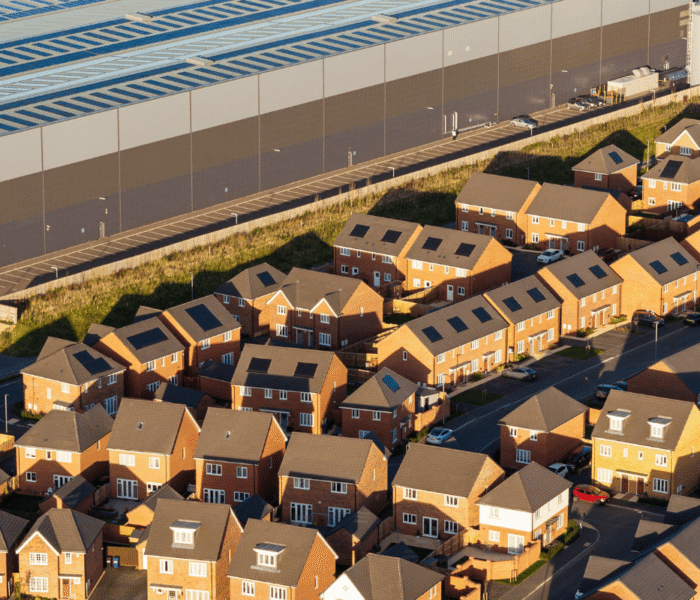
Rainwater harvesting is ideal for new housing developments, apartments and housing associations. Reduce mains water consumption by up to 50% and comply with SuDs requirements.
A Step-by-Step Guide
How Rainwater Harvesting Works
1. Collection
Rainwater harvesting systems collect rainwater from the roof via gutters and downpipes. The water is then directed to the pre-filtration system before entering the storage tank. Roof area and rainfall levels determine the amount of water collected.
2. Pre-filtration
Rainwater passes through a high-efficiency pre-filter that removes leaves, debris, and particles. This protects the storage tank and improves water quality.
3. Storage
Filtered rainwater is stored in a rainwater harvesting tank, which can be installed above ground or below ground. Tank size is designed based on roof area, rainfall, and building water demand.
4. Distribution
Stored rainwater is pumped to toilets, irrigation systems, and other non-potable uses via a secondary break tank. An automatic mains water backup ensures continuous supply when rainfall is low.
The Benefits
Is Rainwater Harvesting Worth It for My Project?
For Local Authorities
For Water Companies
For Developers
For Businesses

Local Authority Plans and economic growth are increasingly being constrained by limited water supplies. Much of England is now classified as seriously water stressed by the UK Government, meaning that growth and expansion of the local economy could be restricted without sustainable water solutions.
How Can Rainwater Harvesting Help?
-
Enable continued development in water-stressed areas
-
Reduce pressure on local infrastructure
-
Reduce localised flooding by managing water where it falls

Water and sewage companies are facing unprecedented challenges across their networks. Ageing infrastructure, population growth and climate change are forecast to create a 5 billion litre per day deficit by 2055.
How Can Rainwater Harvesting Help?
-
Reduce pressure on potable water supplies
-
Reduce stormwater entering wastewater networks
-
Reduce Combined Sewer Overflows (CSOs)
-
Reduce network pressure during peak demand periods
-
Reduce pumping and treatment requirements

Developers are facing increasing pressure around water management and planning restrictions. Large sustainable drainage schemes can reduce usable land area, limiting development potential and affecting profitability.
How Can Rainwater Harvesting Help?
-
Increase buildable land
-
Meet sustainable drainage requirements
-
Meet water efficiency targets within Building Regulations
-
Increase property value

Businesses are increasingly required to meet higher sustainability standards as part of their Environmental, Social and Governance (ESG) commitments. Many are also significant water users and have traditionally benefited from bulk purchasing discounts. Now the water regulator, Ofwat, is introducing new charging mechanisms to promote water efficiency for businesses.
How Can Rainwater Harvesting Help?
-
Protect operating costs as bulk purchasing discounts are withdrawn
-
Continue to grow and expand in water-stressed areas
-
Demonstrate commitment to responsible water management
For Local Authorities
Local Authority Plans and economic growth are increasingly being constrained by limited water supplies. Much of England is now classified as seriously water stressed by the UK Government, meaning that growth and expansion of the local economy could be restricted without sustainable water solutions.
How Can Rainwater Harvesting Help?
-
Enable continued development in water-stressed areas
-
Reduce pressure on local infrastructure
-
Reduce localised flooding by managing water where it falls
For Water Companies
Water and sewage companies are facing unprecedented challenges across their networks. Ageing infrastructure, population growth and climate change are forecast to create a 5 billion litre per day deficit by 2055.
How Can Rainwater Harvesting Help?
-
Reduce pressure on potable water supplies
-
Reduce stormwater entering wastewater networks
-
Reduce Combined Sewer Overflows (CSOs)
-
Reduce network pressure during peak demand periods
-
Reduce pumping and treatment requirements
For Developers
Developers are facing increasing pressure around water management and planning restrictions. Large sustainable drainage schemes can reduce usable land area, limiting development potential and affecting profitability.
How Can Rainwater Harvesting Help?
-
Increase buildable land
-
Meet sustainable drainage requirements
-
Meet water efficiency targets within Building Regulations
-
Increase property value
For Businesses
Businesses are increasingly required to meet higher sustainability standards as part of their Environmental, Social and Governance (ESG) commitments. Many are also significant water users and have traditionally benefited from bulk purchasing discounts. Now the water regulator, Ofwat, is introducing new charging mechanisms to promote water efficiency for businesses.
How Can Rainwater Harvesting Help?
-
Protect operating costs as bulk purchasing discounts are withdrawn
-
Continue to grow and expand in water-stressed areas
-
Demonstrate commitment to responsible water management
Regulations & Standards for Rainwater Harvesting
Rainwater harvesting systems in the UK are governed by specific regulations and technical standards designed to ensure safety, system performance and long-term water efficiency. The following provides an overview of the main requirements.
BS 16941-1:2024
This is the main standard covering the design, installation and maintenance of rainwater harvesting systems in the UK.
Compliance with BS 16941-1:2024 is essential to ensure systems are safe, maintainable and capable of delivering long-term water savings.
The 2024 revision introduced:
- Enhanced protection requirements for automatic mains water top-up arrangements
- Updated tank sizing methodology incorporating climate change considerations
- Clearer guidance around system performance and safety controls
These updates have significant implications for designers, public health engineers and civil engineers involved in sustainable drainage and water reuse.
We have produced a comprehensive technical guide to BS 16941-1:2024 to support consultants and contractors in understanding the latest requirements.
All Stormsaver systems are designed in accordance with this standard. Our technical team can provide project-specific sizing calculations to ensure compliance and optimal performance.
Water Supply (Water Fittings) Regulations 1999
Our rainwater harvesting systems are designed to fully comply with the Water Supply (Water Fittings) Regulations 1999, Schedule 2, Paragraph 14, which requires the prevention of cross-connections between mains water and non-potable water sources.
Rainwater is considered non-potable, so systems must be physically separated from the public mains supply. Our solutions include an automatic mains water top-up with a compliant air gap, ensuring complete protection against backflow and contamination of the public water network.
Design and Operational Reliability
We design systems with long-term performance, maintainability, and operational resilience in mind. Correctly designed systems ensure:
-
Compliant air gap protection
-
Safe automatic mains water back-up
-
Reliable water supply during maintenance
-
Minimal operational disruption
By prioritising regulatory compliance and robust design, our rainwater harvesting solutions deliver safe, reliable, and easy-to-maintain systems for commercial and residential applications.
WaterRegsUK Pipework Identification
Pipework Identification
WaterRegsUK supports the 30 water undertakers responsible for enforcing the Water Supply (Water Fittings) Regulations 1999, helping to promote compliance and prevent cross-connections.
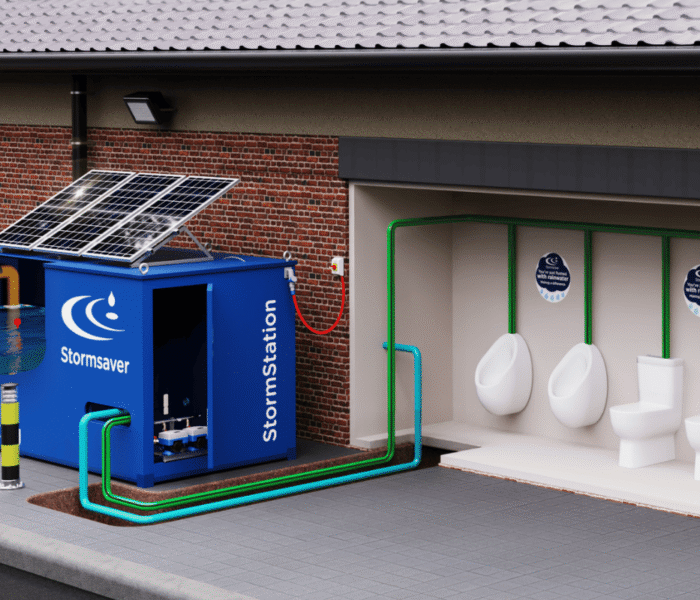
To meet official standards, all non-potable water pipework must be clearly identified. In line with WaterRegsUK requirements, our rainwater harvesting systems feature pipework labelled in black, green, and grey, with clear markings to indicate non-potable water. This ensures compliance while making system maintenance and operation straightforward for your team.
Full List of Regulations & Standards
Take a look at our comprehensive list of relevant regulations to rainwater harvesting in the UK.
What Can Rainwater Harvesting Be Used For In The UK?
Rainwater is safe for use in any non-potable outlet. In simple terms, this means it can be used for any application that does not involve drinking, food preparation, or hygiene. Below are examples of where rainwater harvesting can be used safely and efficiently to meet a significant proportion of water demand.
Toilet Flushing
Traditionally, toilets within commercial and public buildings have been flushed using treated, high-quality drinking water. For businesses and design engineers focused on sustainability, this represents a significant, and avoidable, use of a finite resource.
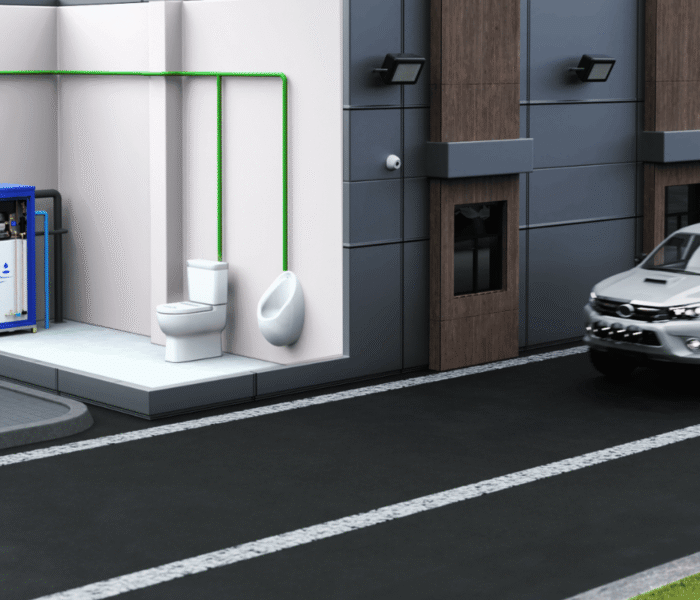
Today, many modern buildings utilise rainwater harvesting to capture rainfall from the roof to supply toilet flushing systems. This is a safe, efficient, and sustainable method of reducing potable water consumption, while also lowering the volume of stormwater discharged into local drainage networks.
With the UK forecast to face a national water deficit of 5 billion litres per day by 2055, the case for using rainwater harvesting for toilet flushing has never been stronger.
How Much Water Can Be Saved?
For commercial developments, toilet flushing is often the largest source of non-potable water demand. In many office environments, up to 75% of toilet flushing demand can be met through rainwater harvesting.
Let’s look at a typical example:
- A new office development with 1,000 occupants
- Each occupant flushes 2.3 times per day
- The building operates 253 working days per year
- Each flush uses 4.5 litres
This equates to an annual water demand of just over 20,600 m³ for toilet flushing alone.
With a well-designed rainwater harvesting system sized appropriately for roof catchment area and occupancy demand, approximately 75% of this requirement, over 15,600 m³ per year, could be supplied by harvested rainwater.
See our full Rainwater Harvesting Applications Guide for more detailed information.
Vehicle and Train Washing
Distribution centres have vast roof areas and require high volumes of water for HGV and truck washing. Traditionally, these large demands were met with precious drinking water. This was not only highly wasteful but also consumed a resource that could be readily captured from the building’s extensive roof space.
Modern distribution centres utilise these large roof areas to safely and efficiently capture rainwater, providing a sustainable supply for HGV vehicle washing facilities.
How Much Water Can Be Saved?
Approximately 75% of vehicle washing demands can be met through recycled rainwater. Let’s consider an example:
- A new distribution centre washes 100 HGVs per day.
- Each HGV wash cycle uses 400 litres.
- Vehicle washing facilities operate 364 days per year.
This results in a total water consumption of 14,560 m³ per year.
Thanks to the large roof areas, 75% of this demand can be supplied by recycled rainwater, meaning 10,920 m³ of water can be saved annually.
See our full Rainwater Harvesting Applications Guide for more detailed information.
Irrigation
Irrigation is essential for the maintenance and aftercare of sports pitches and soft landscaping areas. Traditionally, these facilities relied on precious mains water to irrigate them effectively. However, with a rainwater harvesting system, it is now much more common to use readily available rainwater, which lands clean and clear on the roof areas of buildings.
Applications include:
- Football and sports pitch irrigation
- Irrigation of soft landscaping and SuDS features
- Watering of green roofs
How Much Water Can Be Saved?
- In spring, pitches require 15–20 mm of water per week
- In summer, pitches require 20–30 mm of water per week
- In autumn, pitches require 10–15 mm of water per week
- In winter, pitches require 5–10 mm of water per week
- Overall, this can result in an annual water usage of 4,600 m³
- Approximately 75% of this can be supplied by rainwater, resulting in a saving of 3,450 m³
See our full Rainwater Harvesting Applications Guide for more detailed information.
Cost Guide
Rainwater Harvesting System Costs in the UK
In accordance with BS 16941-1:2024, rainwater harvesting systems must be designed and sized to suit the specific site conditions. Therefore, system costs should always be site specific.
Residential System Costs
Residential system costs vary depending on the configuration and solution.
- Individual plot systems average around £4,000 per property.
- Communal residential systems serving multiple dwellings can reduce costs to approximately £2,000 per plot, representing around a 50% saving.
In new-build developments, capital costs can be offset through water company environmental incentives for new connections.
Commercial System Costs
Commercial rainwater harvesting systems are highly project-specific and influenced by storage capacity, yield calculations, attenuation integration and water demand.
As a general guide, commercial systems in the UK typically range between £15,000 and £40,000+, depending on scale and technical requirements.
For accurate sizing and cost guidance, please contact one of our experts.


Rainwater Harvesting FAQs
Got a question?
Can you install rainwater harvesting systems?
Yes – we provide installation services for rainwater harvesting systems through our hand-selected installation partners.
Typically, a Mechanical and Electrical (M&E) contractor would carry out the installation of a rainwater harvesting system. However, through our trusted installation partner network, we can manage the entire process for you, handling all of the complex connections and commissioning works.
Our installation service is specifically designed to minimise errors, streamline the process, and reduce costs by removing unfamiliar or complicated tasks from your scope.
Learn more about this here
What rainwater harvesting tank sizes do you offer?
Rainwater harvesting tanks can come in all shapes, sizes and materials.
The majority of rainwater tanks installed in the UK are below ground, GRP-constructed tanks. However, where there is no below ground space available, for example, in London, sectional above-ground tanks are located within basement areas.
Tank sizes are available between 3,000 and 100,000 litre capacities. However, we storage requirements exceed 100,000 litres, rainwater tanks can be joined together to form an overall capacity.
On large-scale commercial systems, a small tank is usually paired with bulk storage in the form of geocellular crates. The small rainwater tank is retained for filtration, pumping and maintenance access requirements. Crates can be often more cost-effective where bulk capacities of rainwater storage are required.
What rainwater harvesting tank sizes do you offer?
Rainwater harvesting tanks are available in a wide range of capacities, materials and configurations to suit different project requirements.
In the UK, the majority of systems utilise below-ground GRP (glass-reinforced plastic) tanks. Where below-ground installation is not feasible — for example, on constrained urban sites such as central London — sectional above-ground tanks can be installed within basement or plant areas.
Our standard tank capacities range from approximately 3,000 litres up to 100,000 litres. Where greater storage volumes are required, multiple tanks can be linked together to achieve the desired overall capacity.
For large-scale commercial developments, a hybrid approach is often adopted. A primary rainwater harvesting tank is retained for filtration, pumping and maintenance access, while additional bulk storage is provided using geocellular attenuation crates. This method can offer a more cost-effective solution where very high storage volumes are required.
Is my site suitable for rainwater harvesting?
In most cases, any development with a usable roof area and a demand for non-potable water is suitable for rainwater harvesting.
Commercial and public buildings with a roof area of approximately 500m² or more are often particularly well suited, as larger catchment areas typically generate greater water yield and stronger financial returns.
On residential schemes, this threshold can apply to the combined total roof area across multiple dwellings, allowing rainwater to be collected and stored in a shared tank.
The overall feasibility of a rainwater harvesting system will depend on several key factors:
-
Site location – determines average annual rainfall
-
Roof area – determines rainwater collection potential
-
Non-potable demand – determines how much water can be reused (e.g. toilets, irrigation)
If you are unsure whether your site is suitable, our team can provide an initial assessment and proposal tailored to your development.
What is a rainwater harvesting system?
A rainwater harvesting system is a sustainable water management solution that collects and stores rainwater from the roof of a building. The rainwater is directed into a storage tank – either above or below ground – where it is filtered to remove debris and particles.
The filtered water is then pumped back into the building to be used as a non-potable water supply, meaning it’s not suitable for drinking or bathing but ideal for:
- Toilet flushing
- Washing machines
- Vehicle washing
- Irrigation and landscaping
- Cooling systems
Rainwater harvesting helps reduce reliance on mains water, lowers water bills, and supports sustainability – making it a smart choice for commercial, industrial, and residential buildings.
Do I need a licence to harvest rainwater?
In most cases, no licence is required to install and operate a rainwater harvesting system on your home or commercial property in the UK.
Abstraction licensing
Rainwater harvesting does not normally require an abstraction licence. The UK Government has confirmed through regulatory guidance that collecting rainwater from a roof catchment for reuse is excluded from abstraction licensing requirements.
Private Water Supplies Regulations
The Private Water Supplies Regulations 2018 apply where water from private sources (such as boreholes or springs) is supplied for potable use.
Rainwater harvesting systems are mostly always designed for non-potable applications, such as toilet flushing, irrigation or vehicle washing, and therefore are not usually subject to these regulations.
Will rainwater harvesting help with my planning application?
Rainwater harvesting can support a planning application by demonstrating compliance with sustainable drainage (SuDS) principles and water management policies.
To strengthen your submission, your Drainage Strategy should clearly outline:
-
The purpose of the rainwater harvesting system
-
Tank sizing calculations
-
Predicted water reuse volumes
-
Maintenance and aftercare provisions
-
Integration with wider site drainage design
Lead Local Flood Authorities (LLFAs) will typically assess whether surface water management follows the recognised SuDS hierarchy, including opportunities for water reuse.
Why does rainwater harvesting support planning approval?
England
In 2025, the UK Government introduced the National Standards for Sustainable Drainage Systems (SuDS), which prioritise water reuse, including rainwater harvesting, within the surface water management hierarchy.
Although the standards are currently non-statutory, many local planning authorities have begun incorporating them into local planning policy. As a result, developers are increasingly expected to demonstrate that rainwater harvesting has been considered within the drainage design.
Proposals to make the standards statutory across England are anticipated later this decade, meaning incorporating rainwater harvesting now can help future-proof developments.
Wales
Under Schedule 3 of the Flood and Water Management Act 2010, SuDS approval is required for certain developments. Since 2018, developments over 100m² have been subject to SuDS approval by the SuDS Approval Body (SAB).
In practice, rainwater harvesting should always be considered as part of the runoff management strategy.
Is it possible to retrofit a rainwater harvesting system?
Is it possible to retrofit a rainwater harvesting system?
Yes — rainwater harvesting systems can be retrofitted into existing buildings. However, the feasibility depends on several site-specific factors.
Key considerations include:
-
Is there sufficient space for an above-ground or below-ground rainwater storage tank?
-
Can existing roof downpipes be easily diverted into the rainwater harvesting system?
-
What is the condition and size of the roof catchment area?
-
Where are the points of water use (e.g. toilets) located in relation to the proposed tank position?
-
Is there accessible power and mains water supply for system integration?
Retrofit projects are most straightforward where the storage tank can be located close to roof drainage points, water demand areas and incoming services.
To determine suitability, we recommend arranging a professional rainwater harvesting site survey. For a small redeemable fee, our engineers will provide a detailed feasibility report outlining system options and installation considerations.
Can you provide performance specifications for rainwater harvesting systems?
Yes!
Stormsaver can fully support Public Health, Civils and Design Engineers to write bespoke performance specifications on rainwater harvesting systems. We can also provide access to our full BIM library.
Our estimators are also happy to support with face to face and virtual early design project meetings, where required.
How does a rainwater harvesting system work?
A rainwater harvesting system works by collecting, filtering, storing, and reusing rainwater for non-potable applications such as toilet flushing, irrigation, and washing. Here’s how the system works step by step…
- Rainwater Collection from Roof
Rainwater is captured from the building’s roof via guttering and roof downpipes. It flows into below ground drainage via sealed gully and underground pipework. The sealed gully prevents contamination from external sources.
- Preliminary Filtration
Before storage, rainwater passes through a pre-tank filter or mesh screen (typically 1000 microns / 1mm) to remove leaves, debris, and bird droppings.
- Rainwater Storage
The filtered water enters an above ground or underground storage tank, sized based on roof area and local annual rainfall. These tanks are designed to store sufficient water while preventing stagnation.
- Pumping Water into the Building
A submersible pump inside the tank draws water through a floating suction filter, which extracts water from the cleanest part of the tank to ensure high water quality.
- Water Enters Control Unit
Water flows into a control system such as a break tank, pressure vessel, or preassembled control unit. This is where automatic mains water backup is integrated, ensuring supply continuity during dry periods.
- Non-Potable Water Distribution
The rainwater is pumped through a dedicated non-potable pipework network to supply toilets, washing machines, irrigation systems, vehicle washing stations, and cooling systems.
What are the maintenance considerations for a rainwater harvesting system?
To ensure long-term reliability and maximum efficiency, regular maintenance of your rainwater harvesting system is essential. Like any mechanical or electrical system, planned care helps prevent costly breakdowns and prolongs the lifespan of the equipment.
Recommended Maintenance Schedule:
- Routine servicing every 6 months – this includes system checks, component inspections, and performance testing.
- Tank cleaning every 2–3 years, or more frequently if your system is located near coastal or forested environments where debris and organic matter are more common.
Stormsaver has extensive expertise in servicing and maintaining rainwater harvesting systems. For more detailed guidance, please visit our rainwater harvesting system pages.
Is it safe and how can I mitigate risk on my rainwater harvesting system?
Yes! Rainwater harvesting system are incredibly safe. Here are some of the ways we ensure a safe water supply from collected rainwater…
Minimising the Risk of Cross-Contamination
We prioritise the safety and integrity of your rainwater water supply. To ensure complete separation between harvested rainwater and the mains water system, we ensure our installation community is following industry-best practices through our comprehensive install manuals:
- Advise installers to use clearly identified pipework: Our installation manuals instruct the use of correctly coloured pipework – black and green MDPE pipe – to identify rainwater systems. For copper pipework, we advise to follow official guidance from WaterRegs UK to prevent confusion and ensure compliance.
- Built-In Air Gap Protection: Every rainwater harvesting system we supply includes a non-mechanical, non-electrical air gap in the automatic mains water top-up function. This ensures there is no direct connection between the rainwater and the public water supply, eliminating the risk of backflow or contamination.
Delivering a High-Quality Rainwater Supply
All our systems are designed to provide clean, filtered rainwater suitable for non-potable uses such as toilet flushing, irrigation, and laundry.
- Dual Filtration as Standard – Each system includes…
- A pre-tank filter to remove leaves, bird droppings, and larger debris.
- A floating suction filter to ensure water is drawn from the cleanest part of the tank.
- Optional Third-Stage Filtration: Our Automatic Backwash Filtration system can further filter rainwater down to 35 microns – that’s half the thickness of a human hair, ideal for applications demanding a higher quality of water.
- UV Disinfection for Sensitive Environments: For added peace of mind, we offer UV disinfection systems to kill bacteria and pathogens. We strongly recommend UV treatment in environments with vulnerable occupants, such as…
- Care homes
- Hospitals
- Schools
How can I reduce the risk of Legionella?
At Stormsaver, we implement multiple safeguards within our rainwater harvesting systems to reduce the risk of Legionella bacteria growth – helping to protect building occupants and ensure water hygiene.
- Automatic Mains Water Flush-Through
To prevent stagnant water (a known risk factor for Legionella), our systems include an automatic mains water flush-through feature. This function activates periodically when mains water isn’t frequently used, particularly during periods of heavy rainfall, to prevent the formation of dead legs in the pipework. Keeping the water moving is essential to minimise Legionella risk.
- Strategic Break Tank Placement
Some of our installations use a secondary break tank within the building to meet the non-potable water demand. In such cases, we collaborate with specifiers to ensure these tanks are located at ground or low levels, rather than high-level plant rooms where temperatures may be higher. This reduces the potential for Legionella development due to heat.
- Temperature Monitoring and BMS Integration
As an optional feature, our systems can include temperature monitoring sensors with integrated alarms via the Building Management System (BMS). These alarms alert users when water temperatures:
- Fall below 3°C
- Rise above 28°C
These thresholds help identify conditions that may promote legionella growth, allowing facilities teams to take remedial action and maintain a safe water system.
Written by Experts, for Experts