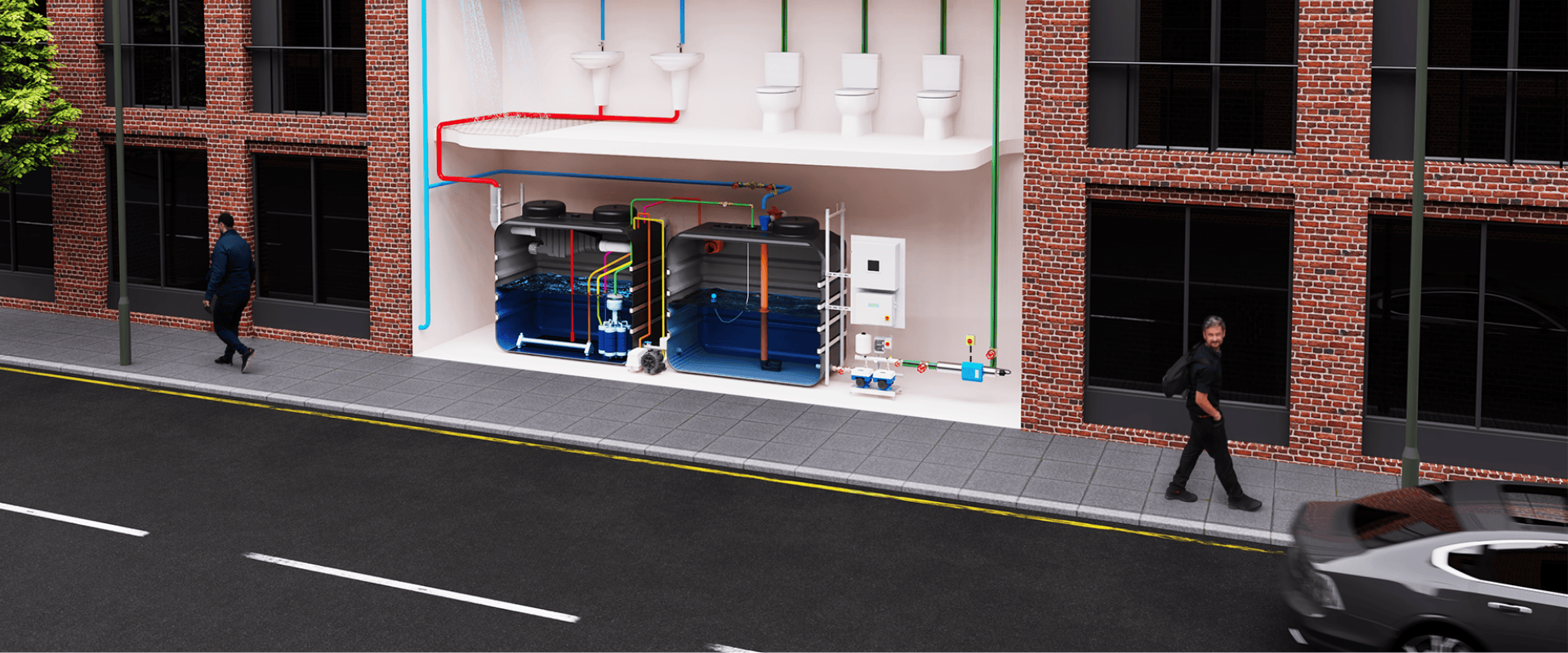
Guide Overview
Water Reuse is the collection, treatment and use of water that would be typically deemed as a waste. This could be rainwater, greywater or stormwater.
Reliance on water reuse and non-potable water systems in new buildings is about to grow in the UK. As with other leading economies, such as Australia, Belgium and Germany, the UK Government is set to push water reuse in the coming years.
This guide will provide you with the following information…
- Urgency & Reasoning
- Rainwater harvesting – use cases, how it works
- Greywater recycling –use cases, how it works
- Stormwater harvesting – use cases, how it works
- Non-potable water reuse hierarchy
- Standards overview for water reuse in the UK
- Next steps for safe implementation in designs
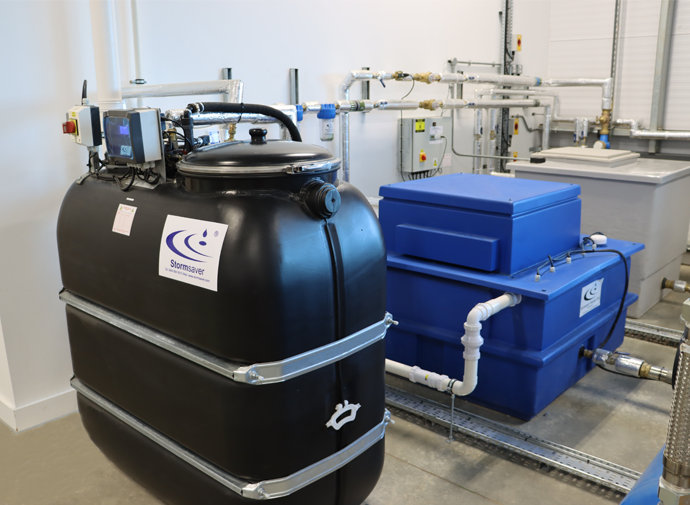
Rainwater
Rainwater Harvesting Systems for Buildings
Collection Points: Roof rainwater
Best for: Housing and commercial properties with large roof areas and a high demand
What is it?
Rainwater harvesting is a well-established water reuse method in the UK.
Rainwater harvesting is a water reuse system that collects rainfall from the roof area of a building for recycling. First, the rainwater is collected and then passed through a pre-tank filter, into a storage tank, and boosted into the building for further filtration and final distribution.
Rainwater harvesting can supply a sustainable water supply to any non-potable (non-drinking) outlet. This includes toilet flushing, washing machines, vehicle washing and cooling purposes.
This is a cost-effective way of achieving water reuse within buildings with a large roof area and a high demand for water. On a residential scale, communal systems are recommended for medium to large developments due to the requirement for ongoing maintenance.

Greywater
Greywater Recycling Systems for Buildings
Collection Points: Showers, handwash basins, bathtubs
Best for: Best suited to buildings of multiple occupation, such as student accommodation and apartments
What is it?
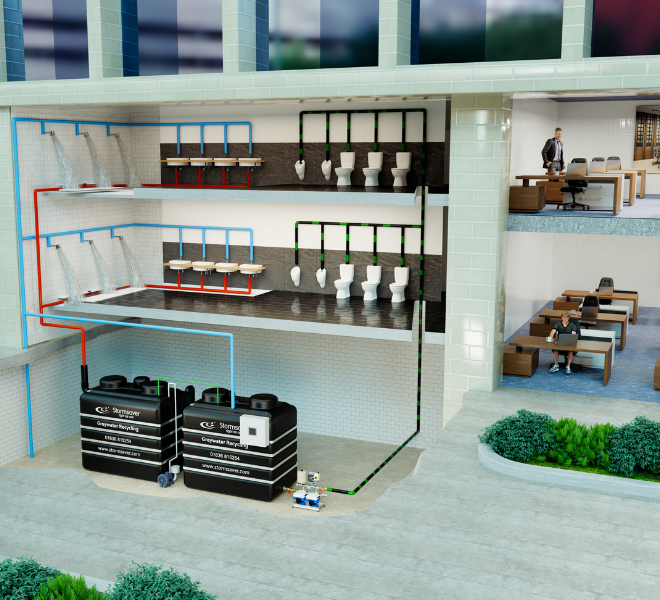
Greywater recycling is the best method of achieving water reuse in high-density buildings. Compared to rainwater harvesting systems, the filtration on a greywater recycling system is much more complex due to the higher pollutant load in the greywater when compared to rainwater.
Greywater is first collected from showers, handwash basins and bathtubs. Greywater is first passed through a pre-tank filter to remove hair and fibres from the greywater supply. The greywater is then treated in a bioreactor which uses biological treatment to break down soaps and foams.
After biological treatment, greywater is passed through an ultrafiltration stage (0.02 microns) to remove any harmful viruses and bacteria. Greywater is then distributed to a clean water tank to be supplied to non-potable outlets within the building.
Stormwater
Stormwater Harvesting Systems for Buildings
Collection Points: Roof and hardstanding stormwater
Best for: Typically chosen for areas where roof collection potential is insufficient for the demand within the building
What is it?
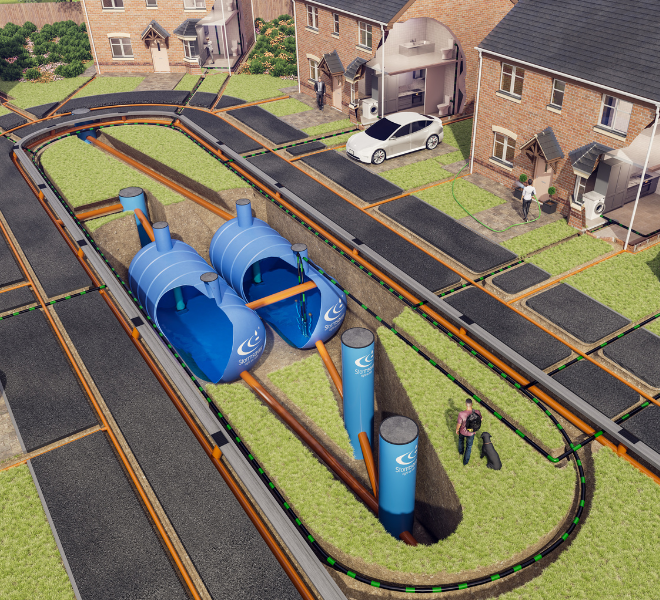
Stormwater harvesting is a method of water reuse which collects both rainwater from the roof area and stormwater from hardstanding areas like car parks and pedestrianised areas. Here is how it works…
- Stormwater is collected from roofs, pedestrianised areas and car parks
- Oils, petrols and heavy metals are removed via a mechanical separator or natural reed beds
- Stormwater passes through a pre-tank filter to remove remaining larger particles
- Stormwater is stored until a non-potable water supply is required
- Prior to distribution to outlets, stormwater is polished to improve water quality via carbon filtration
Compared to rainwater harvesting, stormwater harvesting systems require more complex preliminary filtration and final water polishing to remove pollutants and safe levels of water quality. In contrast to rainwater from the roof, stormwater contains more heavy metals, oils and petrols.
Combined
Combined Technologies for Rainwater and Greywater Recycling
Collection Points: Roof rainwater, showers, handwash basins, bathtubs
Best for: Offices, leisure centres and schools
What is it?
In many cases, where there is a high demand for non-potable water in a building, engineers may choose to utilise both rainwater harvesting and greywater recycling technologies to boost the available supply.
In these systems, rainwater from the roof is treated via a typical rainwater harvesting system, and greywater collected from showers, handwash basins and bathtubs is treated via the greywater recycling system. Once treated, both the rainwater and greywater are used to top up a combined break tank.
Treating both rainwater and greywater separately and then combining them once treated is the most efficient method of achieving water reuse on a combined level. This is because of the additional complexities and filtration needs for greywater recycling.
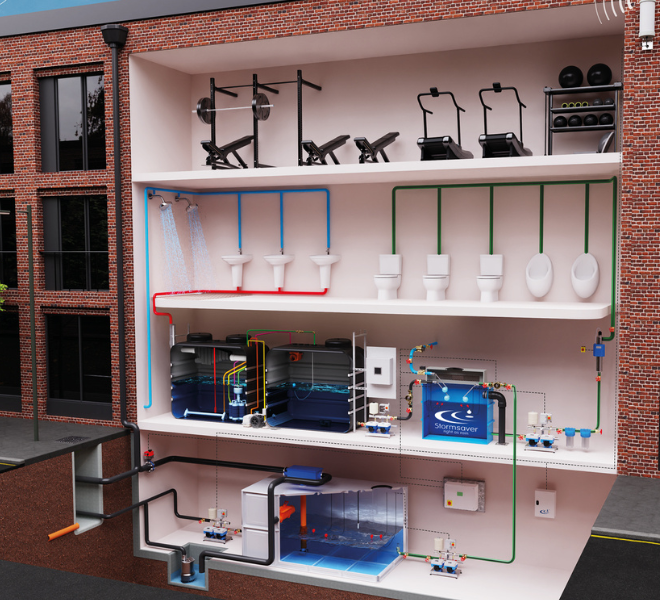

Water Reuse Hierarchy – Rainwater Harvesting vs Greywater Recycling
A non-potable water reuse hierarchy has been published by Anglian Water to determine which water reuse technologies should be considered first on new building projects. This is based on ease of installation and complexity of filtration.
The hierarchy is as follows:
- Rainwater Harvesting
- Greywater Recycling
- Stormwater Harvesting
- Blackwater Recycling

Standards for Water Reuse in the UK
There are a number of standards and regulations which govern water reuse systems in the UK. These are…
- National Standard for Sustainable Urban Drainage (England)
- Statutory Guidance for Sustainable Urban Drainage (Wales)
- BS 16941-1 – for rainwater harvesting
- BS 16941-2 – for greywater recycling
- Water Supply (Water Fittings) Regulations 1999 – Regulation 14
Read our full UK Guide to water reuse standards and legislation.
Next Steps
Essential Knowledge Required by Engineers for Water Reuse
If you are a public health engineer, civils engineer, flood risk assessor or a sustainability manager, knowing the following information about water reuse will help to support best practice implementation…
- How rainwater harvesting and greywater recycling systems work
- Standards and regulations for water reuse in the UK – learn more here
- Maintenance and management plans
- Best practice design tips
- Required fail-safes
- Designing for future maintainability
How to learn more
We encourage you to:
- Keep up to date with our expert articles – we update them weekly! Written by experts, for experts
- Book your team onto a free, accredited CPD session
- Follow our LinkedIn for key updates