Legionella Testing
Legionella is a harmful bacterium that can grow in bodies of stored water and artificial water systems. Like any water system, testing is essential to ensuring a legionella-free environment for safe rainwater reuse. With rapid testing solutions which produce on-site results, learn more about legionella below.
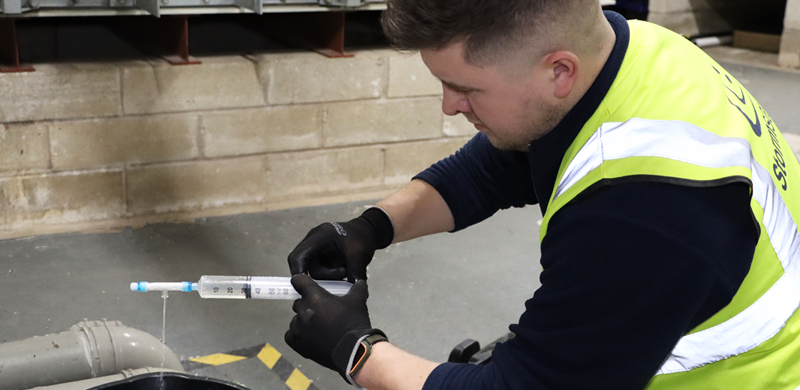

Results in just 25 minutes
Making compliance easy through proven testing solutions…

Integrated with Service Visits
Our rapid on-site testing is conducted as part of your regular service visits, reducing hassle for you.

Rapid On-site Results
Our test produces highly accurate results in just 25 minutes. No need to wait for lab testing which can take up to 14 days!

Testing for Serogroups 1-15
Our advanced tests provide safe and accurate detection of serogroups 1–15, covering the full spectrum of bacterium variants, offering complete peace of mind.
Key Information
What you need to know about Legionella for Rainwater Harvesting Maintenance...
What is Legionella?
Why Does Legionella Grow?
Compliance Information
Mitigation Measures
Legionella is a waterborne bacterium that can develop in stored water and artificial water systems. For people with weakened immune systems, Legionnaires’ disease, a severe form of pneumonia caused by Legionella, can be fatal if bacteria are inhaled through water droplets.
Keeping your rainwater harvesting system free from Legionella is therefore critical for health and safety. Like other man-made water systems, rainwater harvesting systems are not exempt from the risk of Legionella growth.
Legionella bacteria thrive under certain conditions, including:
- Water temperatures between 20 and 45°C with around 35°C being the optimum.
- Stored water tanks where sludge, rust, scale, or algae have built up.
- “Dead legs” in pipework where water stagnates in unused sections of piping.
- Cold Water Systems which are prone to biofilm growth, offering a source of nutrients for legionella to grow.
In the UK, ACOP L8 is the Approved Code of Practice for controlling Legionella. While not legally binding, it is strongly recommended, particularly for businesses with more than five employees.
ACOP L8 requires buildings to have a comprehensive Legionella risk assessment that considers all water systems together, not in isolation. The assessment should also outline clear actions to take if Legionella is detected.
To minimise risk in rainwater harvesting systems, we recommend…
- Two service visits per year to check system functionality.
- A full tank clean every two years to remove sludge, biofilm, and other debris from storage tanks.
What is Legionella?
Legionella is a waterborne bacterium that can develop in stored water and artificial water systems. For people with weakened immune systems, Legionnaires’ disease, a severe form of pneumonia caused by Legionella, can be fatal if bacteria are inhaled through water droplets.
Keeping your rainwater harvesting system free from Legionella is therefore critical for health and safety. Like other man-made water systems, rainwater harvesting systems are not exempt from the risk of Legionella growth.
Why Does Legionella Grow?
Legionella bacteria thrive under certain conditions, including:
- Water temperatures between 20 and 45°C with around 35°C being the optimum.
- Stored water tanks where sludge, rust, scale, or algae have built up.
- “Dead legs” in pipework where water stagnates in unused sections of piping.
- Cold Water Systems which are prone to biofilm growth, offering a source of nutrients for legionella to grow.
Compliance Information
In the UK, ACOP L8 is the Approved Code of Practice for controlling Legionella. While not legally binding, it is strongly recommended, particularly for businesses with more than five employees.
ACOP L8 requires buildings to have a comprehensive Legionella risk assessment that considers all water systems together, not in isolation. The assessment should also outline clear actions to take if Legionella is detected.
Mitigation Measures
To minimise risk in rainwater harvesting systems, we recommend…
- Two service visits per year to check system functionality.
- A full tank clean every two years to remove sludge, biofilm, and other debris from storage tanks.
FAQs
Got a question
Help My Rainwater Harvesting System Has Tested Positive for Legionella...
Wondering what to do next?
If your rainwater harvesting system, or any part of the water system in your building, has tested positive for Legionella, it is critical to follow the steps outlined in your Site-Specific Legionella Risk Assessment.
We recommend carrying out a full tank clean if you experience a positive result for Legionella. Our team can provide this service for you, so get in touch today.
What Protections Do Stormsaver Rainwater Systems Have Against Legionella?
If you have a Stormsaver rainwater harvesting system installed, you are in luck. As part of our continuous improvement process, we have incorporated several built-in protections…
Mains Water Flush Through
If there is no demand for mains water in the rainwater harvesting system for an extended period, this can create stagnant water which encourages bacteria to grow. To prevent this, our systems automatically open the mains water top up pipework every night for a short period of time to keep water moving.
Break Tank Location
Many rainwater harvesting systems have a break tank inside the building where the mains water top up is located. Modern Stormsaver systems now position these tanks at a lower level within the building. Lower placement creates a cooler environment, reducing the risk of Legionella growth.
Temperature Alarms
Our systems can be supplied with temperature alarms that connect to the building management system. These alarms trigger if water falls below 3°C or rises above 28°C, notifying you when conditions become more favourable for Legionella growth so that remedial action can be taken.
Are Rainwater Harvesting Systems at Greater Risk?
The short answer is no. Rainwater harvesting systems carry the same risk as any other artificial water system in a building.
A well designed, properly specified system is perfectly safe. That is why we recommend involving Stormsaver during the specification process of a new rainwater harvesting system. With over two decades of experience, we can ensure best practice is followed from the very beginning.