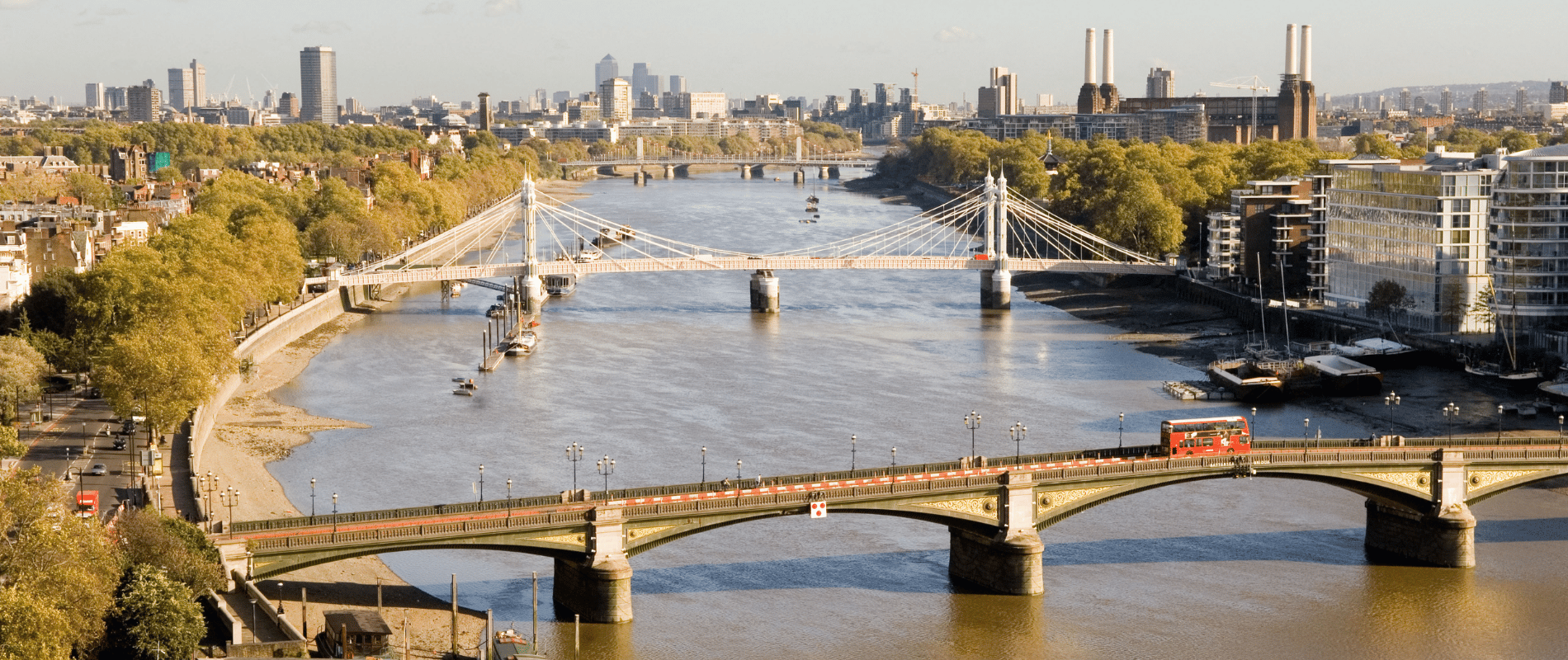
Last week, the Mayor of London launched the Clean Rivers and Waterways Plan, a long-term strategy designed to improve the capital’s rivers, streams, and waterways.
The plan sets out an ambitious vision to reduce pollution and enhance London’s blue spaces by focusing on four key priorities:
- Improving water quality
- Enhancing nature and biodiversity
- Increasing public access
- Promoting inclusion and community engagement
To achieve these aims, the strategy outlines 48 actions and 17 goals to be delivered by 2036. One of the most significant commitments for the water reuse sector is the intention to improve financial incentives for private property owners installing rainwater harvesting systems and permeable surfaces.
Action 8: Scaling Up Sustainable Drainage
Action 8 focuses on accelerating the delivery of sustainable drainage (SuDS) across London.
As part of this work, catchment action plans for Central London will be published, with the Flood Ready London Partnership leading efforts to expand the use of sustainable drainage measures. This includes developing financial incentives to encourage the installation of rainwater harvesting systems, with delivery targeted by 2027.
How Does This Build on the 2021 London Plan?
The Clean Rivers and Waterways Plan builds on the foundations of the 2021 Greater London Plan, which already places a strong emphasis on water efficiency and water reuse within the planning process.
Several existing policies directly support the adoption of rainwater harvesting:
Policy SI 12 – Sustainable Drainage
Lead Local Flood Authorities are encouraged to identify areas at high risk of surface water flooding and promote the use of rainwater harvesting in line with the established drainage hierarchy.
Policy SI 5 – Water Infrastructure
Planning proposals are expected to demonstrate improved water efficiency, including:
- Non-residential buildings should achieve a minimum BREEAM Excellent rating. In many developments, achieving this standard is significantly easier when incorporating rainwater harvesting and greywater recycling.
- New developments should aim for a mains water consumption target of 105 litres per person per day, exceeding the standard 125 litres per person per day set out in Part G of the Building Regulations. Rainwater harvesting can typically reduce mains water demand by around 25 litres per person per day, while greywater recycling can contribute a further 30 litres, demonstrating the important role of water reuse technologies in meeting these ambitious targets.

Our View
We welcome the commitment to introduce financial incentives for rainwater harvesting by 2027.
To maximise the impact of these incentives, we encourage the Flood Ready London Partnership to engage with a broad range of stakeholders, including residential and commercial developers, building owners, end users, and crucially, facilities management teams.
Providing financial support for installation is an important first step, but long-term success depends on systems being properly operated and maintained throughout their lifespan. Involving those responsible for ongoing maintenance from the outset will help ensure these systems continue delivering environmental and financial benefits for years to come.
While London-specific incentives are a positive development, we believe a consistent national approach would provide greater clarity for developers operating across multiple regions and help accelerate the adoption of water reuse technologies throughout the UK.