What to expect
Guide Overview
The benefits of rainwater harvesting are gaining increasing attention across the UK.
With growing pressure on water infrastructure, rising water costs, and increasing sustainability requirements, businesses and developers are looking for ways to reduce mains water demand. In many buildings, using rainwater harvesting can reduce total water consumption by 75%.
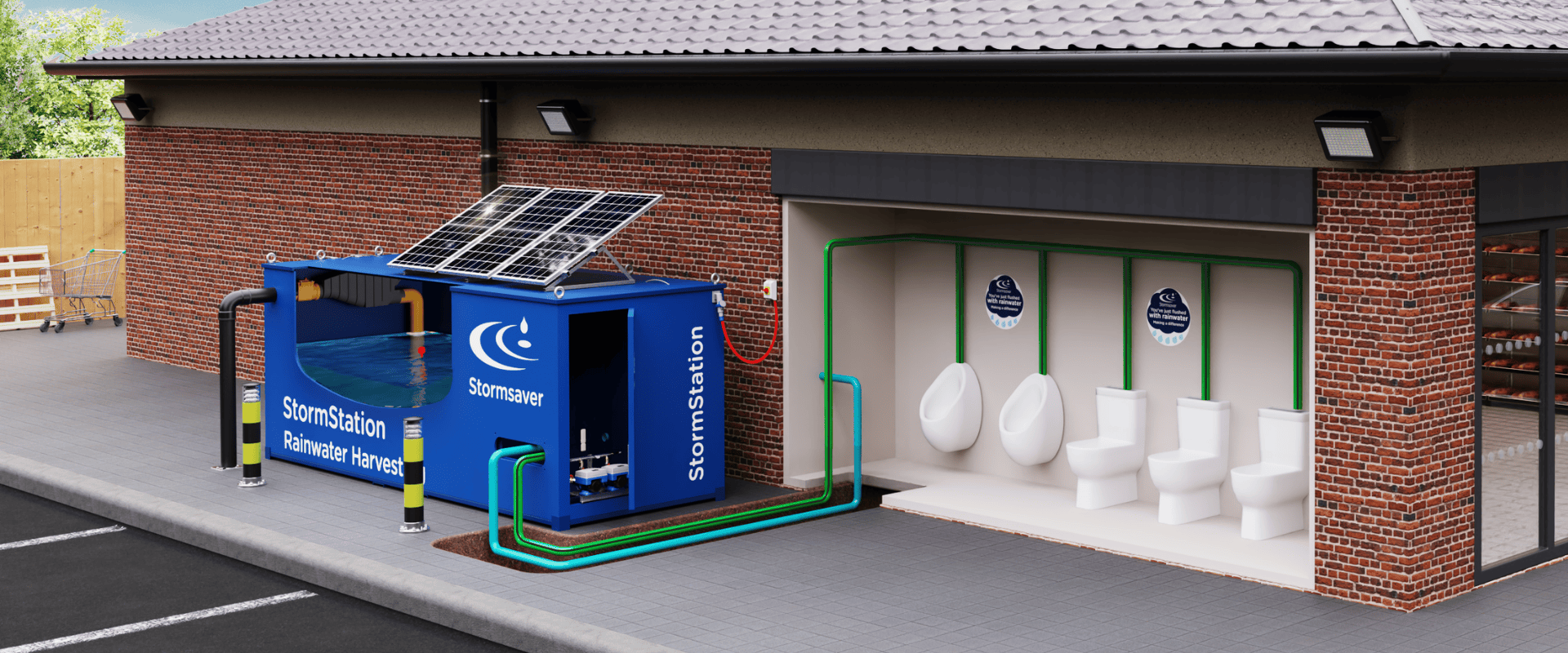
Rainwater harvesting systems collect rainfall from roofs, filter it, and store it for non-drinking uses such as:
- Toilet flushing
- Irrigation
- Washing machines
- Vehicle washing
Guide Contents
Our comprehensive guide offers a full analysis of the benefits of rainwater harvesting systems in the UK.
This guide is designed to support all stakeholders involved in the design, delivery and operation of rainwater harvesting systems to make informed decisions.
- Benefits of rainwater harvesting for Sustainability Managers
- Benefits for Engineers
- Benefits for Housing Developers
- Benefits for Water Companies
- Tailored advice on implementation for each stakeholder type
Benefits of Rainwater Harvesting for Sustainability Teams
Rainwater Harvesting System Payback (UK)
Payback of rainwater harvesting systems should be calculated using a ‘progressive’ approach. This considers future water prices, not just today’s prices.
As demand grows, scarcity increases and infrastructure ages, water bills will continue to rise annually, and payback calculations should account for this. Average bill increases in 2025 were 26%.
High water-using businesses have another consideration: the removal of falling block tariffs by Ofwat. Essentially, this will remove existing charging methods that reward high water users with bulk purchasing discounts.
The payback period for rainwater harvesting is usually between 10–15 years, with progressive calculations often leading to shorter payback periods.
Sustainability Reporting Requirements
Non-financial reporting on environmental matters is now a mandatory part of reporting under section 414 of the Companies Act 2006.
Companies with an annual turnover of £500 million or more or with 500 employees or more are now expected to report non-financial matters.
Water saving data from a rainwater harvesting system can demonstrate that your company is helping to mitigate impacts on the environment in non-financial reporting.
Enable Continued Business Expansion
- Under the Water Industry Act 1991, water companies can refuse new connections to the water network.
- Rainwater harvesting is now required for new developments under the National Standard for SuDs.
- Incorporating rainwater harvesting can reduce the amount of drinking water required from the public supply, encouraging water companies to approve new connections.
Advice on Next Steps
- Consider how rainwater harvesting fits into your wider sustainability strategy.
- Review your existing estate for rainwater harvesting systems and ensure these are operational.
- Incorporate rainwater harvesting into new building specifications – and inform your design engineers.
- Once you’ve addressed the above, you can then consider quick-win rainwater harvesting retrofit opportunities.
Benefits of Rainwater Harvesting for Housing Developers
Financial Incentives for Rainwater Harvesting (UK)
- Income offset payments on new connections have now ended for housing developers.
- Developers can now be financially rewarded for achieving higher water efficiency standards through environmental incentives.
- Environmental incentives provide a financial discount on new connection charges.
- Most water companies state that rainwater harvesting must be included to achieve these discounts.
- Affinity Water (£2,880 max), Thames Water (£2,500 max), and Anglian Water (£3,000 max) are currently offering the highest incentives.
Rainwater Harvesting: Space Requirements and Land Savings
Housing developers typically allocate around 15% of development land to sustainable drainage.
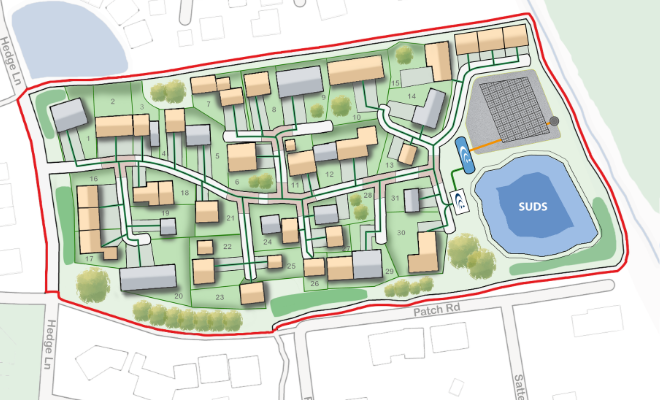
Incorporating communal rainwater harvesting systems to manage stormwater from roofs can reduce the size of the required attenuation basins.
When combined with rainwater harvesting, smart SuDS systems can also be located beneath public amenities such as play parks.
Together, these approaches can reduce the amount of land required for SuDS, creating more space for homes. This is one of the key benefits of rainwater harvesting for housing developers.
Complying with the National Standard for SuDS (UK) with Rainwater Harvesting
The recent launch of the National Standard for SuDS positions rainwater harvesting as the primary runoff destination for new developments.
This means rainwater harvesting should be used to manage runoff in the first instance.
The standard is currently non-statutory (not yet legislation). However, the Revised Environmental Improvement Plan includes a commitment to introduce legislation by 2029.
In addition, many local authorities have already chosen to adopt the standard early, meaning that in some areas rainwater harvesting is already expected as part of new developments.
Advice on Next Steps
Book on to one of our Communal Rainwater Harvesting CPDs where we will run through the technology and regulatory environment in more detail.

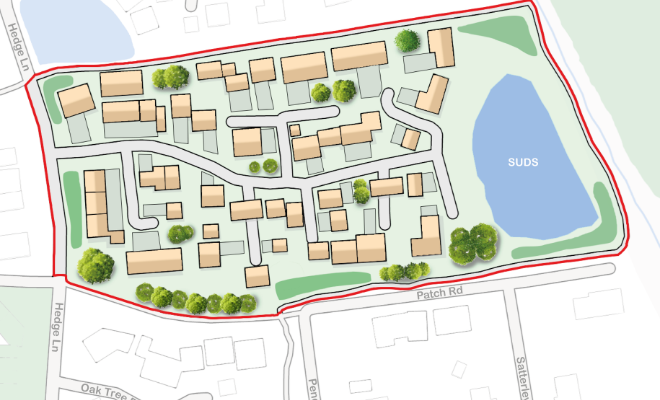
Example Rainwater Harvesting Diagram
Take a look at our handy before and after schematics showing the space saving impacts of rainwater harvesting.
Benefits of Rainwater Harvesting – For Design Engineers
Meet BREEAM V7 Requirements with Rainwater Harvesting
BREEAM V7 is now live, shifting from a traditional focus on fixtures and fittings to a whole-building approach to water efficiency.
A key part of this is the increased emphasis on water reuse technologies, including rainwater harvesting and greywater recycling.
Notably, BREEAM V7 introduces an exemplary performance credit for achieving 95% of total non-potable water demand through recycled rainwater or greywater.
Incorporating rainwater harvesting can help design engineers achieve the higher ratings of ‘Excellent’ and ‘Outstanding’, placing the building among the top 10% of sustainable buildings in the UK.
Design Buildings Fit for the Future
- The National Water Resources Framework forecasts a water deficit of 5 billion litres per day by 2055.
- The UK Government aims for 60% of this deficit to be addressed through improved water efficiency.
- Research by Ricardo shows that retrofitting rainwater harvesting to an existing building is 50% more costly than incorporating it at the new-build stage.
- Every new building constructed without water reuse adds to the UK’s water scarcity challenge.
- While fixtures and fittings can be easily replaced, water reuse systems are integrated into the building’s design, making them a long-term solution.
Meet Local Planning Authority Requirements
Many local planning authorities now expect rainwater harvesting and water reuse to be integrated into the drainage strategy for new developments. Key requirements include:
- London Plan Policy SI 13: Sustainable Drainage – Rainwater harvesting is a central element of Surface Water Management Plans.
- Birmingham City Council – The SuDs Design Guidelines prioritise the most sustainable option: reusing rainwater locally within the building.
- Manchester City Council – The Greater Manchester Sustainable Drainage Guide follows a hierarchy that identifies water reuse as the primary runoff solution.
- Newcastle City Council – New development applications are reviewed against the National Standards for SuDs and the Ciria SuDs Manual.
- Surrey County Council – New applications should align with principles set out in the National Standard for SuDs.

Benefits of Rainwater Harvesting – For Water Companies
Support Water Resources Management Plans (WRMPs)
Demand management is a key component of Water Resources Management Plans (WRMPs) and features heavily in the National Water Resources Framework.
Rainwater harvesting can effectively support demand management efforts. It can reduce per capita consumption by 25 litres per person per day in residential settings and reduce potable water consumption in non-household properties by up to 75%.
Greater water efficiency can be achieved with rainwater harvesting without the need for complex behaviour change or large-scale capital infrastructure investment.
Unlike a fittings-based approach, rainwater harvesting systems are long-term assets within a building and cannot be easily removed once the building has been commissioned.
Incorporating rainwater harvesting into WRMPs can be achieved by providing enhanced environmental incentives for both residential and non-household new connections. This approach supports developers in covering the costs of installing rainwater harvesting systems.
Support Drainage and Wastewater Management Plans (DWMPs)
With Combined Sewer Overflows (CSOs) moving to the forefront of the agenda and forming a key part of AMP8, pre-pipe solutions for managing stormwater, such as rainwater harvesting, are becoming increasingly favourable.
Live monitoring of our Smart SuDS rainwater harvesting systems shows that, by reusing rainwater locally within buildings, stormwater runoff can be reduced by up to 87%.
This approach ensures that less stormwater requires costly and complex transportation and treatment within the public wastewater network.
Advice on Next Steps
- Support the campaign for mandatory water reuse in the UK
- Explore environmental incentive offerings for new connections
- Identify large roof areas in the locality of CSO hotspots and fund retrofit systems on these sites
- Book your demand management and wastewater teams onto one of our free CPDs

Summary of Benefits for Rainwater Harvesting in the UK
As demonstrated in this benefits analysis, rainwater harvesting is a credible, cost-effective, and safe method of achieving water efficiency.
The next step is to understand how rainwater harvesting systems work and to explore best practice for integrating them within a building. You can do this by booking onto one of our accredited CPD sessions.